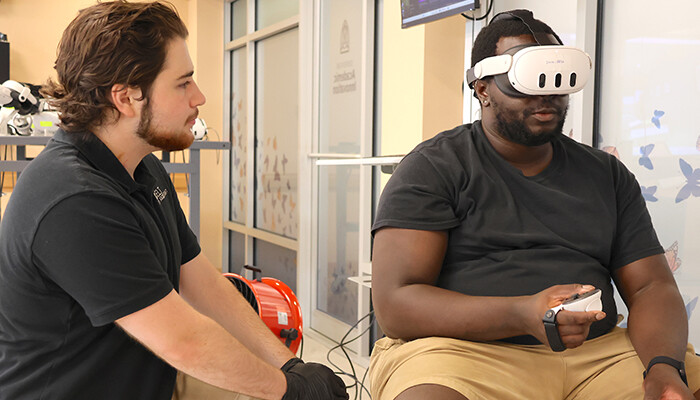
At Maria College, the IT team is onsite during campus visits to set up the virtual reality equipment and troubleshoot any issues.
Because visitors are introduced to the same software current students use in laboratory assignments and clinical preparation, they leave with an understanding of how they would learn at Maria College and an ability to picture themselves in the program, Rivenburg says.
Universities Rely on IT Partners To Deliver First Impressions
To make first impressions that resonate with visitors, admissions teams must rely on their IT counterparts. Wichita State’s Gandu and his team depend on the campus Media Resources Center for “everything from hardware to installation to media players to connectivity to ordering,” he says. “The expertise of our team is to deliver the content to our guests, not to build the tech infrastructure behind the scenes.”
Gandu shared his vision for the ideal guest experience with IT leaders, and they came back with tech recommendations and pros and cons. Their input gave the admissions team “the confidence we needed to make the tech work in our space,” Gandu says.
At Maria College, Jason Coley, director of the Center for Academic Innovation, leads the hands-on VR portion of a campus visit with support from CAI technicians. Because of the types of experiences offered to visitors, IT collaboration is needed, Rivenburg says.
DISCOVER: Virtual reality experiences help students hone their soft skills.
“The IT team prepares the equipment, helps visitors with headset fitting and controls, and guides them through the activity while explaining its connection to coursework and professional practice,” Rivenburg says. “Staff also need to recognize when someone is having technical difficulty and when they need help understanding what the simulation asks them to do. For prospective students encountering VR for the first time, this specialized support makes the experience approachable and gives them an early sense of how Maria would help them learn.”
Collaboration Between Admissions and IT Departments is Crucial
IT teams can make an important difference in the campus visit experience, but it takes partnering with admissions teams to achieve shared goals. Consider these tips for working together to build memorable campus visits:
- Take time to listen. Enrollment leaders probably have a specific vision for the visitor experience they want, as well as a required budget, Gandu says. IT leaders can be better partners when they understand the vision.
- Share your expertise. IT teams may know about cost-efficient technologies that can deliver the desired experience, while the admissions team may not realize the specific technology exists. “Enrollment professionals are under a lot of pressure to shape classes for their institutions, but they need campus tech experts along to help command a potent, visual storytelling experience for visitors,” Gandu says.
- Involve other teams. In some cases, designing the ideal campus visit experience requires help from additional stakeholders. For example, Maria College seeks input from those who teach with and support simulation technologies, as well as IT and admissions leaders, to develop the right immersive experiences for prospects.
- Keep the focus on the prospective students. “The aim is for prospective students to leave able to picture themselves learning at the college, with a clearer understanding of the career they are considering and how we would help them prepare for it,” Rivenburg says.