






Community College Loaner Program Leads to Measurable Results
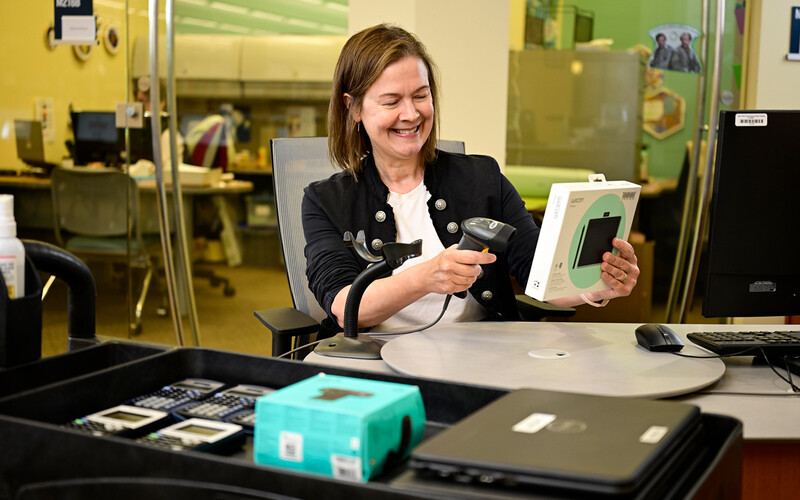
Brightpoint Community College piloted its loaner program back in 2018, lending out Chromebooks. “When the pandemic hit, students were coming to our accommodations office or the dean of students’ office saying, ‘I don’t have a computer. I’m going to fail all my classes,’” Sherry says.
The school had about 60 or 70 devices circulating then, “but the demand was much bigger” and the school ramped up, she says. “Now, we have about 700 in circulation, and last academic year, we loaned devices 1,680 times.”
It made sense for the library to lead the scaling effort. “We know how to do processes and we know how to communicate,” she says. “And we have our integrated library systems, these huge databases where we can check things out to students and we can record where things are.”
READ MORE: Device programs pave the way to digital equity.
As the program grew, the library adjusted staffing. “Now, one of our six full-time positions manages this program. And we have a part-time person who works on this program,” she says.
Others in the school also play a role. “We had to have the lawyers look over our form, because students do lose things, and we wanted to make sure that we could try to get things back,” she says. But they’ll forgive a lost laptop, for example, if there’s a police report or insurance claim showing it was lost in an apartment fire. “We are here for the students to graduate. We want them to do this.”
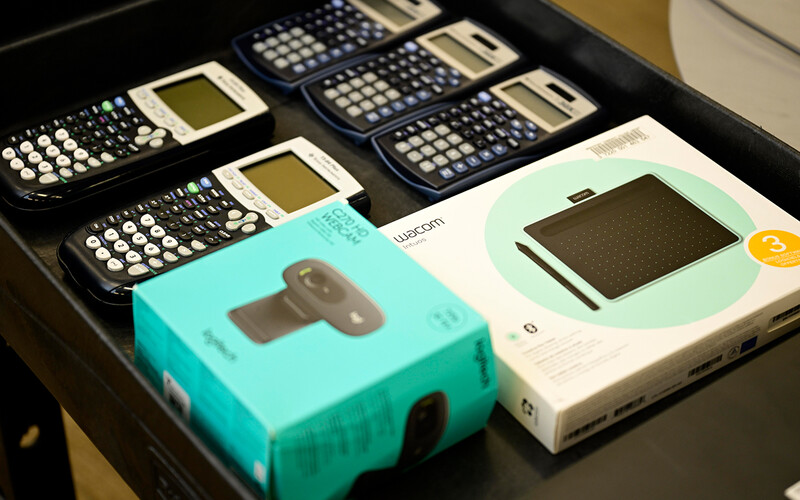
The loaners are, in part, old faculty and staff devices, classroom laptops that have been repurposed. The effort has had a measurable impact: Year-to-year retention increased more than 7% in students who borrowed library laptops, and credential attainment increased 11%.
“Folks were more concerned about the devices going missing. From a library point of view, devices will go missing. But this is how our students will be successful,” Sherry says. “You can’t let that stop you.”
Lone Star College Program Serves All Students
With more than 20 locations, Lone Star College System made a big pivot during the pandemic. It was a “massive shift” to get all coursework online in a month, says Quentin Wright, president of Lone Star College-Houston North.
But there was an unexpected benefit: Money from the CARES Act helped fund the launch of a device loaner program. Since then, that effort has become institutionalized, serving 31,000 students to date, Wright says.
Having HP and Apple iPad devices available for students to borrow is an essential equity play. “One third of our students are on Pell Grants. We have a significant number of students who are on financial aid. Many of our students work, so finances are an issue,” he says. That’s especially true for first-year students. “We have fairly low tuition, but the books and the supplies can be a shock to students.”
READ MORE: Modern device refresh strategies keep organizations safe.
To pay for the loaner effort beyond the initial CARES Act funding, the school tapped its “special initiatives” budget line. Wright also looked for ways to streamline. To that end, the school launched Community Assistance and Resources for Everyone, or CARE.
“It’s a one-stop shop for students that need help with basic needs,” including access to technology, he says. They can request a loaner device there and also get financial help to buy their own device. “It made it easier for the students, and helped us to institutionalize the program.”
The impact has been clear. From August 2021 through 2025, the cumulative persistence rate for students who participated in the loaner program was 5% higher for students who received devices, according to Wright.
“That’s the whole idea of equity: Meet students where they are and get them to an even playing field,” Wright says. “The fact that these students are performing slightly better, that is a win.”