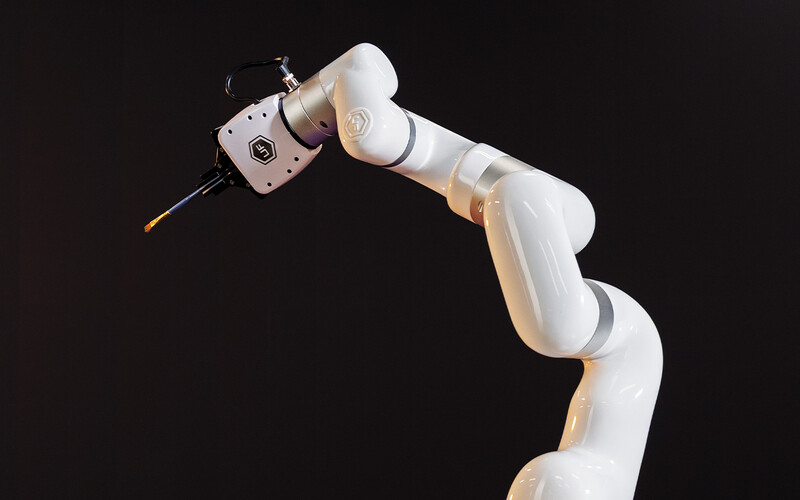







“We’ve got the digital twin of a humanoid robot,” Jamerson says. “You could run the simulation and be in a situation where a robot arrives at an oil rig, there’s an emergency, and it doesn’t know what to do. But within five minutes, you could train it on a week’s worth of trying different approaches.”
VR Amenities Support Collaborative Robotic Research Efforts
In recent years, computing power and VR advancements have facilitated broader possibilities for robotics research and use, says Nancy Amato, IEEE Robotics and Automation Society president and director of the University of Illinois at Urbana-Champaign’s Siebel School of Computing and Data Science.
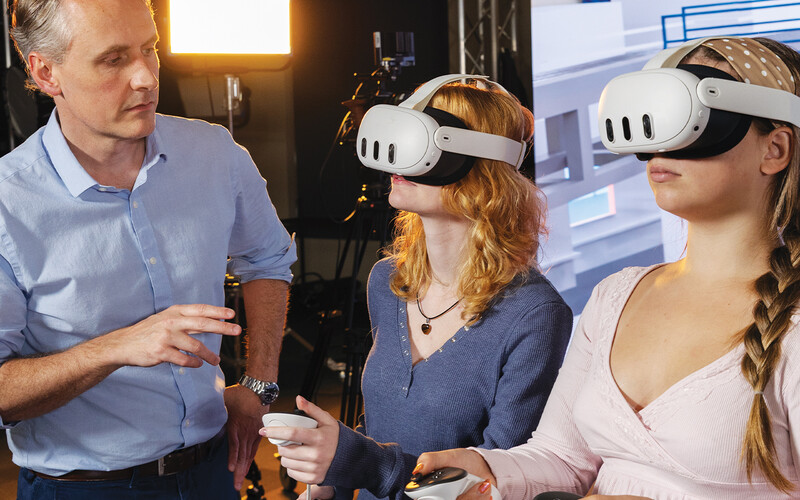
“Before, robots in factories would typically be in cages to keep people away from them for safety reasons,” Amato says. “We are ready to develop systems that can be aware of their surroundings. You can have a virtual headset and ask the robot to implement instructions. That can help someone learn how robot operation works, and how to program the robot.”
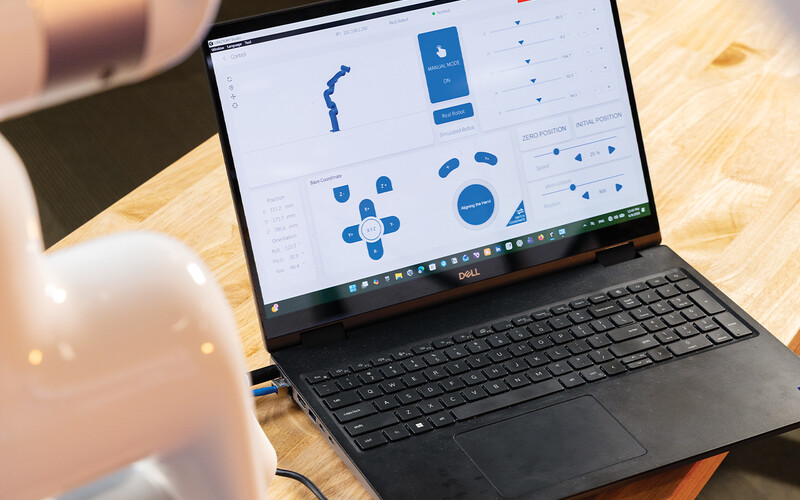
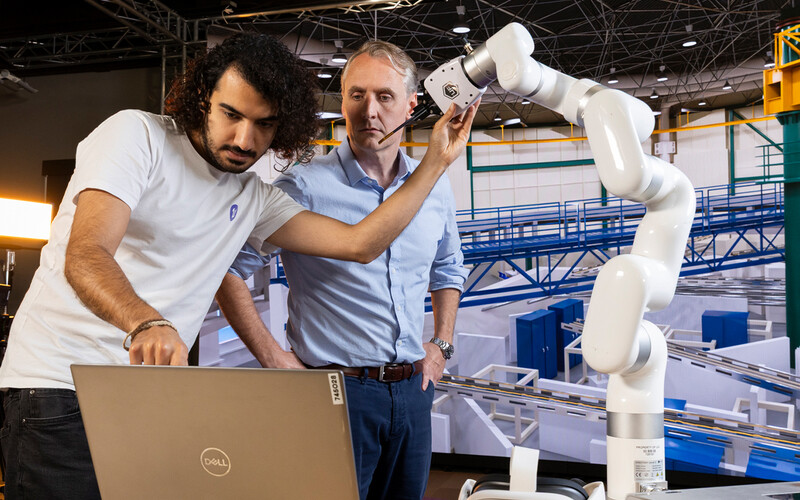
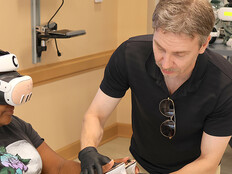
Virtual research experiments can also familiarize college students with robots’ tech components, ranging from computing systems that process interaction data to sensory elements such as cameras. These are crucial inclusions, Jamerson says, because robots are generally much stronger than humans and could easily injure them.
DISCOVER: Virtual reality and artificial intelligence can help students improve soft skills.
The connectivity methods used to convey information can vary depending on research project perimeters.
Although some of Jamerson’s work, for instance, has employed Wi-Fi and Bluetooth, when NASA asked his team to create a digital twin of a facility that uses robots in production four years ago, the federal agency’s security requirements prohibited wireless device use.
The team created a LIDAR scan of the rocket factory, built software for onsite and remote employees to work collaboratively with robots located in the building using Apple iPhone devices and Meta Quest 3 VR headsets. Then, researchers designed and produced wired sensors, which Jamerson says gave students a chance to learn about physical computing and digital fabrication.
“We were working for a major government partner, and for our subsequent work, we’ve had to build a rather unique university framework that includes being able to work with controlled unclassified information,” he says. “Everything served out to the user was via AWS GovCloud.”