




Close

New Research from CDW Explores AI and Cybersecurity

Learn how AI is helping IT teams manage risk and improve resilience.

Nov 10 2026
Classroom

Classroom Technology Standardization Transforms the Faculty Experience

A unified classroom technology approach can provide a consistent experience for instructors and reduce support needs.

For higher education IT departments managing dozens or hundreds of classrooms, the cost of inconsistency compounds quickly in support hours, spare parts and instructor frustration. Standardization is emerging as a clear path forward to reduce this burden for all parties.

In 2024, the University of Rhode Island began replacing the array of classroom audiovisual components it had purchased from multiple manufacturers with an AV over IP platform. The transition has helped make servicing — and using — classroom technology less challenging, according to Lead Information Technologist Jeffrey Levesque. 

The IT team can now view system elements and power cycle equipment remotely to fix issues. And Levesque’s repair budget has been freed up because he can keep fewer extra parts on hand.

During the first week of classes in fall 2024, after the technology had been installed in numerous classrooms, IT team members waited by the phone for a potential influx of support requests.

“They thought instructors were going to have issues,” Levesque says. “But nobody called about the new systems. They were working great.”

Click the banner below to learn how modern learning environments impact student success.


A Unified Infrastructure Can Streamline Tech Storage and Implementation

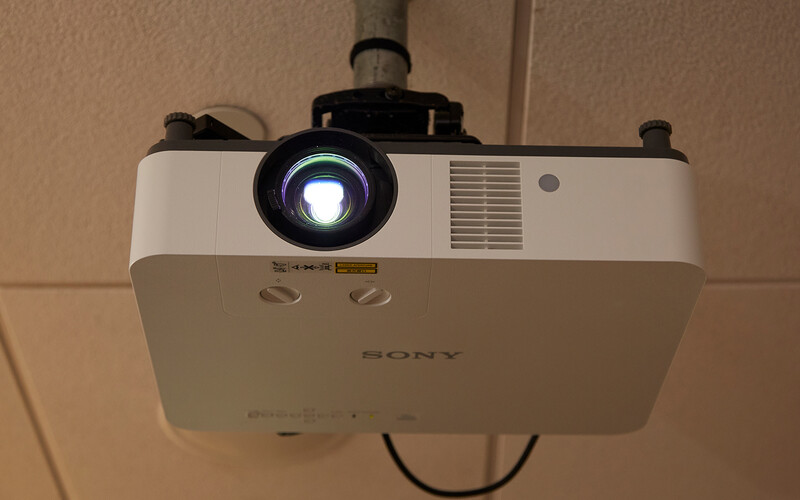
URI classrooms contain a core processor for control and audio processing, video routing endpoint units, and a dedicated switch to run the AV network. Other AV components include pan-tilt-zoom cameras, Sony projectors and Bravia displays, and wireless presentation devices. Some rooms have lecture recording devices; although an Apple Mac mini computer is available in many rooms, instructors can also bring laptops.

“We provide HDMI hookups, a USB-C hookup,” Levesque says. “They can plug one cable in, display their content, get the USB audio and camera right to their laptop and charge their laptop at the same time.”

DISCOVER: IT-friendly classroom audio solutions improve troubleshooting.

To date, the new technology has been added to roughly half of URI’s classrooms.

“What we tend to hear most from instructors is, ‘When is this coming to this classroom I teach in?’” Levesque says. “I think of that as a huge compliment. That’s probably the nicest way they can say, ‘We really like what we have here.’”

A growing number of institutions are implementing uniform audiovisual elements, according to Erin Maher-Moran, board of directors chair for the Higher Education Technology Managers Alliance AV advocacy organization and a classroom technology IT manager at Johns Hopkins University.

Jeffrey Levesque
What we tend to hear most from instructors is, ‘When is this coming to this classroom I teach in?’”

Jeffrey Levesque Lead Information Technologist, University of Rhode Island

Establishing an AV standard can simplify training needs, Maher-Moran says — allowing sessions to be held in one location or fewer video tutorials to be produced — and may also boost schools’ purchasing power.

“If we have the same equipment in each room, we can go ahead and buy 100 of something and potentially get price breaks,” she says. “It makes it much easier to justify doing the same thing in every space.”

While remote learning during the pandemic prompted colleges and universities to elevate tech resource and support budgets, according to Maher-Moran, most can’t afford to roll new standardized systems out in dozens of spaces at a time.

Some — such as Brandeis University — opt to update a certain number of rooms a year. Eighty of Brandeis’ more than 340 classrooms are now HyFlex spaces, which facilitate synchronous and asynchronous learning, according to CIO Jim La Creta.

READ MORE: Colleges put modern technology on display for campus visits.

The rooms primarily feature PTZOptics cameras, mounted upside down on the back and front walls to improve their ability to tilt and maximize viewing angles, and a wired Shure Microflex Advance MXA920 ceiling-installed microphone. Sony, AVer and Crestron 1 Beyond cameras are used in some larger rooms.

Extron control processors and touch panels let instructors use predefined camera presets or make manual adjustments.

“A faculty member could literally walk across campus to a different room and have it look the same,” La Creta says. “We’re looking for a consistent experience for everybody, and this is this is the best way to do it. It’s less work on our end to troubleshoot issues, and instructors get a resolution faster.”

Standardizing classroom technology has also helped the university offer lecture capture capabilities. Instructors can share class recordings through the school’s learning management system.

“It gives students another option,” La Creta says. “You could have a transcript of the class and watch the recording if there was a section you didn’t understand.”

Standardization Can Expedite AV System Installation

The University of Arkansas for Medical Sciences created a universal AV infrastructure after realizing its initial tech refresh plans — which involved customizing each room’s design — would take months, says Ernie Bailey, manager of classroom technology.

The IT team examined the previous few years of the health sciences university’s classroom design requests and found 80% were identical, prompting a new approach.

“We designed a program that will work in all situations,” Bailey says. “It doesn’t matter if it’s a room that seats 12 to 15 or 250; we can scale it up without any problems. Now we have one basic list of equipment we put in.”

UP NEXT: AV-over-IP systems simplify maintenance in higher ed classrooms.

The team can now turn a room over in five days, allowing it to install the technology year-round because classes can typically be moved easily for a week.

The school’s most heavily used classrooms have been receiving virtual Crestron VC-4 processors; PTZOptics cameras; digital speakers; Shure and Sennheiser microphones; and LG, Samsung and NEC displays.

82%

The percentage of institutions with capital projects planned that are focusing on classroom technology investments

Source: xchange.avixa.org “When AV Tech Fails, Students & Faculty Leave,” Feb. 6, 2026

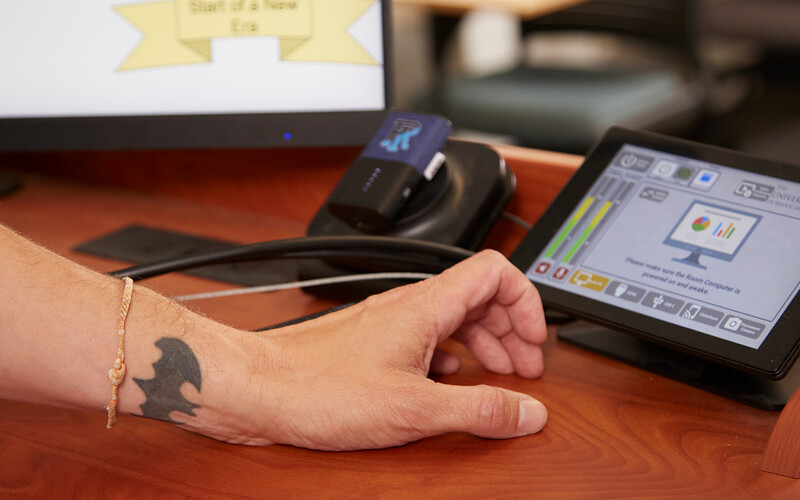
Instructors can wirelessly connect their laptops to a control touch panel located on the wall or lectern or use a Dell computer to easily perform actions such as muting a microphone.

Having a more consistent AV infrastructure has also proved helpful because numerous surgeons and researchers lecture about a specific topic for just a day or two a year on campus — and would otherwise have to learn to use different tech systems each time, Bailey says.

To further simplify the AV components’ installation — and support continuity — the IT team builds items that aren’t mounted on the ceiling or walls into an equipment rack. All cables come to one location in a room; if necessary, a prepopulated rack can be rolled in, and a patch panel on its back can be connected.

“We use the same port numbers in every classroom,” Bailey says. “If we had a major lightning strike that that knocked out a rack, we could take a rack from another room or a spare rack and be up and running probably in a day and a half, by the time we do all the configuration. Previously, that would have taken six to eight weeks, at least, to replace.”

Photography by Robyn Twomey