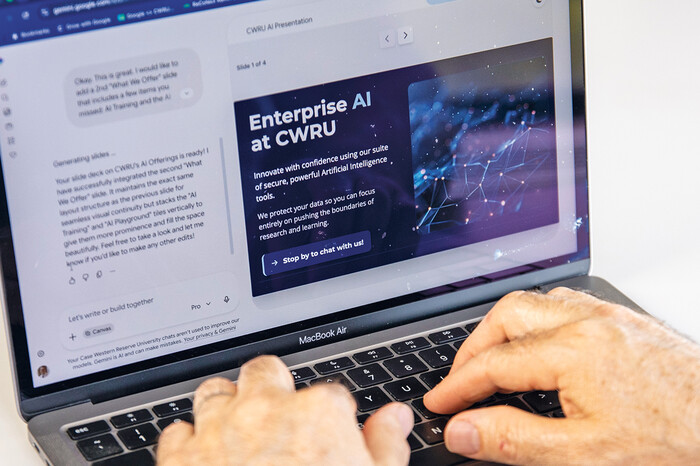






A primary goal, Compton-Engle explains, was to help the campus community move away from relying on unsecured consumer AI tools. Their fear was that a faculty member, for example, might leverage a free service for their research and have their data disclosed or used for model training purposes. With that in mind, when they made Gemini available, they attempted to maximize adoption by tailoring the rollout to various users’ needs.
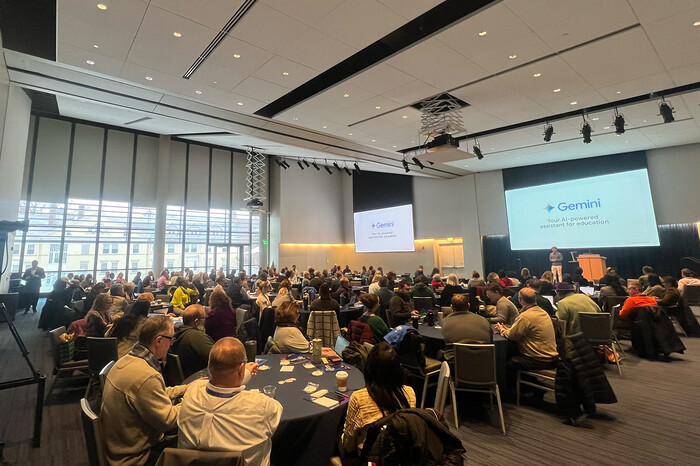
Faculty and staff were offered trial licenses of Gemini Pro (now called Google AI Pro) so they could gain experience with the tool right away, and university leadership — including the president, provost and deans — received Pro licenses and in-person training on advanced AI use cases. In December 2025, CWRU staged a half-day event featuring Google representatives and targeted information sessions, and that was followed up with a monthly office hours series that UTech hosted via Google Meet. “Each meeting was open to the entire campus,” Compton-Engle says. “We’d present on what was new in Gemini, and then we’d have a Q&A.”
IT also maintains a web page that’s focused on the generative AI services and applications available to the CWRU community, and it runs articles on the subject in its regular technology newsletter. Today, departments across campus can purchase Pro licenses that allow their teams to work from common baselines and experiment with sophisticated Gemini workflows, while all faculty, staff, and students have access to the non-Pro tier that comes with their institution-issued Google accounts.