





Phase 2: Classroom Investment Is Now Tied to Enrollment and Retention
CIOs and technology directors can — and should — frame classroom investment for a provost, a board of trustees or an endowment committee as the enrollment argument that it now is. The institutions winning the enrollment conversation right now aren't just the ones with the best programs. They're the ones where the technology makes the whole experience feel worth it.
Higher ed enrollment has declined year over year for quite a while now. Institutions know this and they're building accordingly. Michigan State University is constructing a brand new data and innovation center solely aimed at data sciences. That's a full capital commitment, not a wing down a hallway in the science building. Data science wasn't even a standalone major three years ago. Campuses are redesigning entire spaces to match where the workforce is going because students want to train with the tools they'll actually use in their careers.
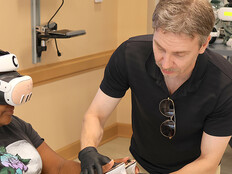
That logic started in specialized programs: med schools with simulation labs, robotics and VR. If a medical student is going to do surgery with that equipment in five years, they want to train on it now. But what used to be concentrated in high-prestige or high-investment programs is now spreading across campus. NC State University integrates esports into their media centers, pulling emerging tech into student writing, research and learning hubs in a way that blurs the line between academic spaces and professional preparation. Students in seats equals money on campus. The environments those seats are in are increasingly part of the calculus.
These projects cannot avoid being modern — they are expected to be fully future-proofed at the network and infrastructure level. In short, for newer builds, modern isn’t a buzzword — it’s a baseline requirement.
Phase 3: The Student Experience Has Expanded Well Beyond the Classroom
The third phase is harder to quantify but impossible to ignore. It’s about wayfinding, game day, student unions and athletics venues. Can a student go to a basketball game on a Saturday and feel like the campus is running at the same level as their phone? Can they pay with Apple Pay — an expected part of the student experience for many — find their way without frustration and feel safe?
That convergence — tech-enabled environments that are safe, fun, engaging and easy — is moving from nice-to-have to expected. That's a significant shift from where higher ed has been focused for the past decade, which was almost entirely on lesson capture and whether the mic was loud enough. And the tools driving that broader experience are increasingly the same ones that started in the classroom: collaboration and casting solutions are now the backbone of digital signage and campus-wide engagement spaces, and institutions that treat them as one infrastructure decision rather than separate budget lines are getting further faster.
DISCOVER: How AVoIP modernizes AV systems, reduce costs and future-proofs your campus.
Why the ROI Conversation Has Become Easier for Higher Ed CIOs
Institutions have become much better at building true personas — from faculty to students to university employees — and mapping technology decisions to what those groups actually need. When there's a clear pathway to a defined outcome, the barriers fall faster than most people expect.
Higher ed has also diversified its funding streams in ways that make certain investment conversations almost straightforward. When a grant requires a specific outcome, the question becomes execution, not justification. The harder conversations happen at the edges where purpose isn't crystal clear, or where an institution is chasing what I'd call the bleeding edge: a brand new major, 15 students, two faculty members and the rest of campus still needs buses running on time. Those barriers are real and they're not going away. But as long as the purpose is defined, with student success, faculty effectiveness and program growth as the anchors, the investment tends to follow.
The right question isn't which option is the most impressive. It's whether a given investment satisfies the need, future-proofs the space and can be sustained. A solution that covers 20 rooms well beats a showpiece that covers one room perfectly. That's the framework that actually moves institutions forward.