




Close

New Research from CDW on Workplace Friction

Learn how IT leaders are working to build a frictionless enterprise.

Apr 29 2026
Classroom

University Media Centers Bring Creative Tech to the Community

Cutting-edge digital production centers form bridges between students, industry and local neighborhoods.

Last spring, on a preview tour of the Cleveland Institute of Art’s new Interactive Media Lab, two students from the school’s animation arts program decided to hang back and marvel at the high-tech spaces: an extended reality studio, a video production center, a gaming lab and more. It wasn’t until CIA CIO Matthew McKenna, who oversees the IML’s operations, began shutting down for the day that he realized the students were still inside.

“I’m getting ready to leave and I see people moving around the studio,” he recalls.

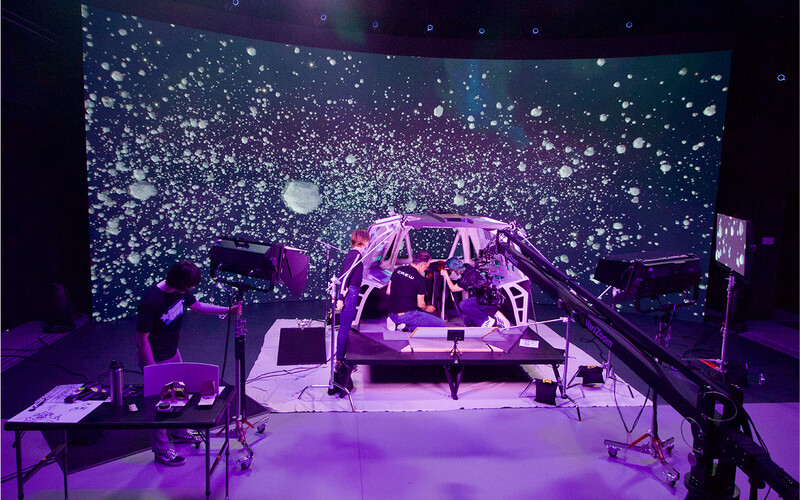
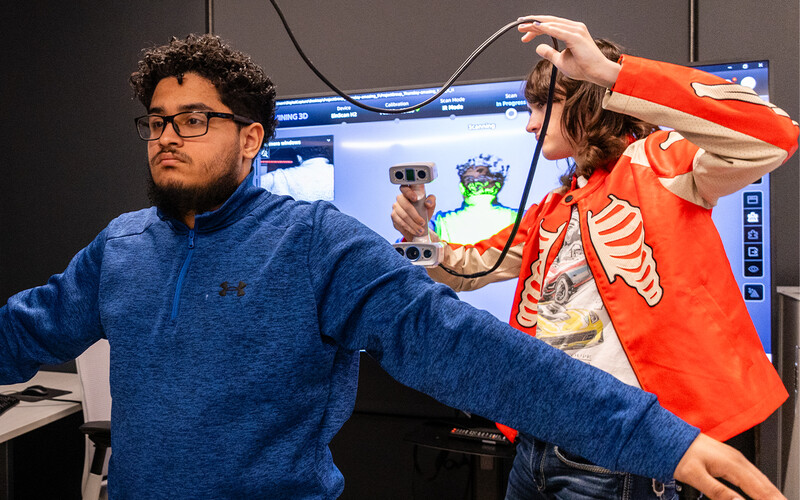
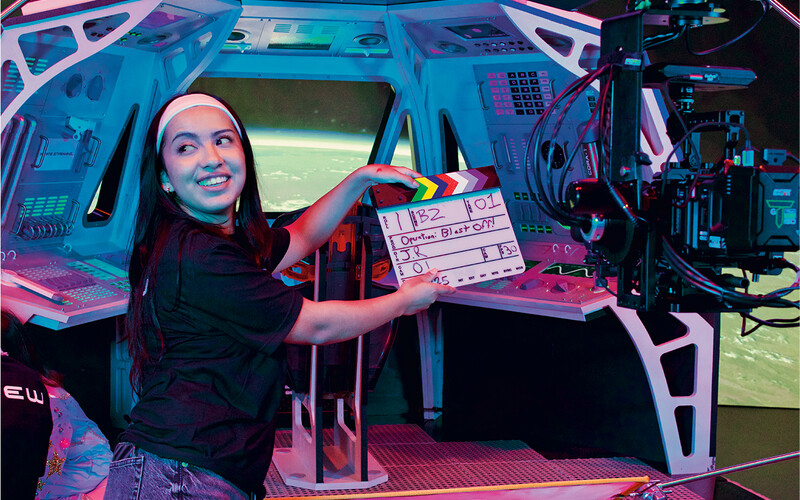
The students, initially nervous about being discovered, told McKenna they couldn’t believe their school had created something so cool. The XR Studio includes a 36-foot, curved LED video wall and OptiTrack motion capture system. The Experience + Edit Center has haptic chairs, virtual reality headsets and a 360-degree Dolby Atmos sound system.

Click the banner below to see the benefits of modern learning environments.


“I told them they could come back anytime,” McKenna remembers. If fact, he ended up hiring one of the students. “He’s been one of the most enthusiastic and knowledgeable student employees at the IML.”

It’s this kind of enthusiasm that many higher ed institutions want to create — among students, faculty and community — through the establishment of advanced media centers. Not only do spaces like the IML aim to prepare students for a new, decidedly digital future, they can also foster bonds with local industry and the communities in which they operate.

Officially opened in September 2025, the $13 million IML takes up 14,300 square feet in Cleveland’s MidTown Collaboration Center, itself a recently christened facility where different sectors of the local economy — education, healthcare and business development — come together. At a time when technology permeates all aspects of society, the IML stands to benefit everyone.

“It’s a very tech-forward space,” McKenna says. “We did our best to select technology based on our curricular needs as well as what would strategically serve businesses and the community. It’s our hope that the more time and work our community does in the IML, the more it will grow.”

Creative Production Spaces Outgrow the Classroom

In the years surrounding the pandemic, universities focused on bringing modern technology to classrooms, lecture halls and auditoriums to support evolving pedagogy, including remote and hybrid learning modes. With much of that infrastructure built out (or somewhere along an upgrade cycle), schools are now turning to bigger experiences within their walls and beyond.

“We’re starting to see greater investment in nonclassroom, shared engagement spaces, especially as schools compete for students,” explains Sean Wargo, principal of tech research firm Apogee Insight, which specializes in the professional and broadcast audiovisual industries. “In fact, many colleges and universities see investment in studios, production and immersion as extensions of the classroom experience. But they’re also links to future employers, collaborators and the public.”

Increasingly, these university media centers are seen as regional bastions of innovation and creativity, bridging higher education to the commercial opportunities afforded by gaming, digital storytelling and immersive entertainment. According to Wargo, the technical innovation in some of these centers can rival the fast-moving entertainment industry. “In that respect, they really are creative engines,” he says.
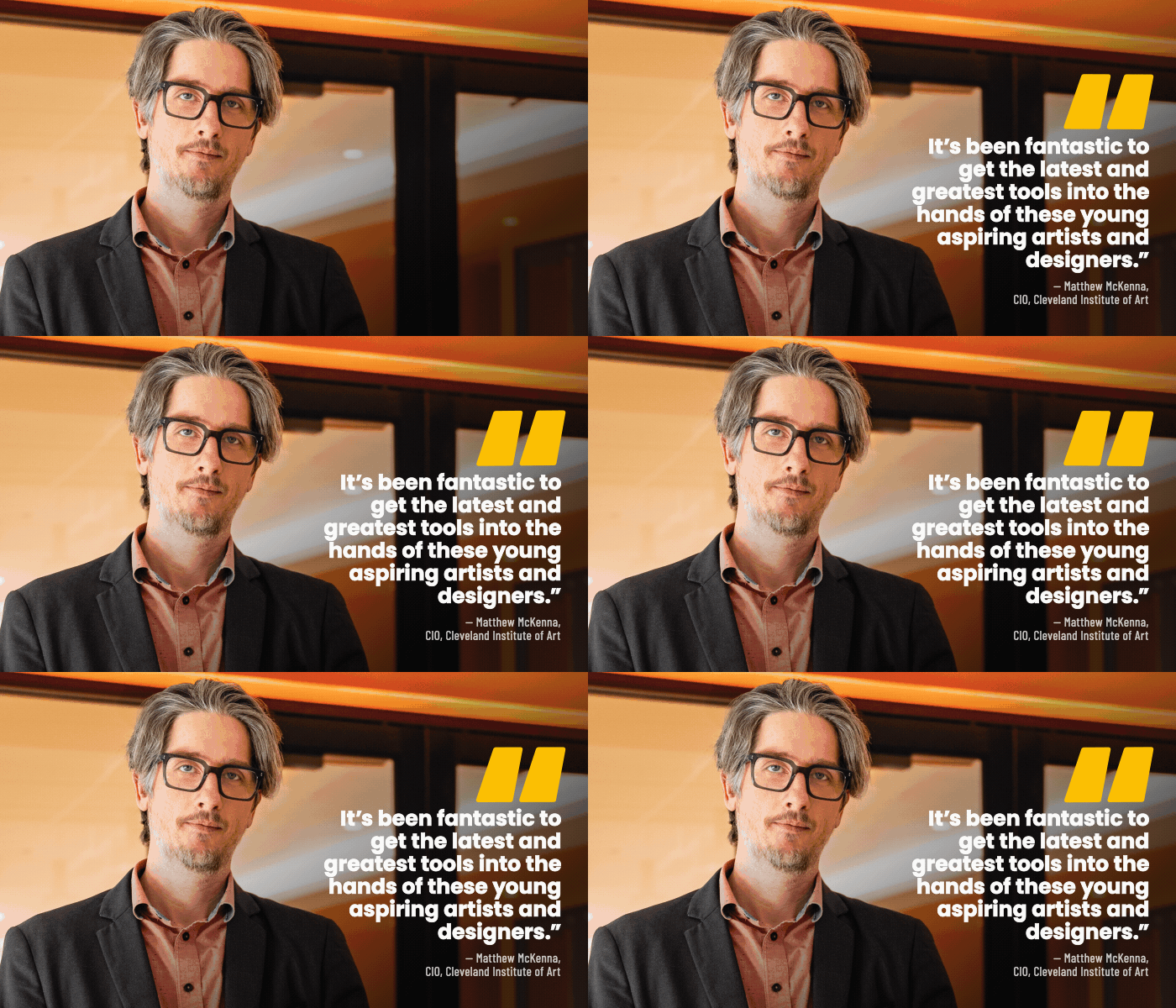
Matthew McKenna


IML Opens the Door to Opportunities

For schools, adopting immersive, experiential technology requires an educated leap of faith. After all, digital technology tends to move faster than the institutions using them. In Cleveland, CIA leaned heavily on an IML advisory group to match needs with solutions.

“Some of this technology was so new that folks really didn't understand it until they saw it in person. And then you could see light bulbs go off,” McKenna says. “It's been rewarding to see how we could take tried-and-true techniques, combine them with cutting-edge technology, and come out with something that really transforms what we do in the classroom and with industry.”

The spacious XR Studio even has a large garage door, through which the Crawford Auto Aviation Museum at the Western Reserve Historical Society recently drove a DeLorean for one project. The IML has also helped with creative work for the Aspen Ideas Festival.

Community is also welcome in the IML, not just to experience the work of students and faculty, but to access the facilities for their own projects. “Every space is available to rent,” McKenna says.

LEARN MORE: Immersive technology can bridge the skills gap.

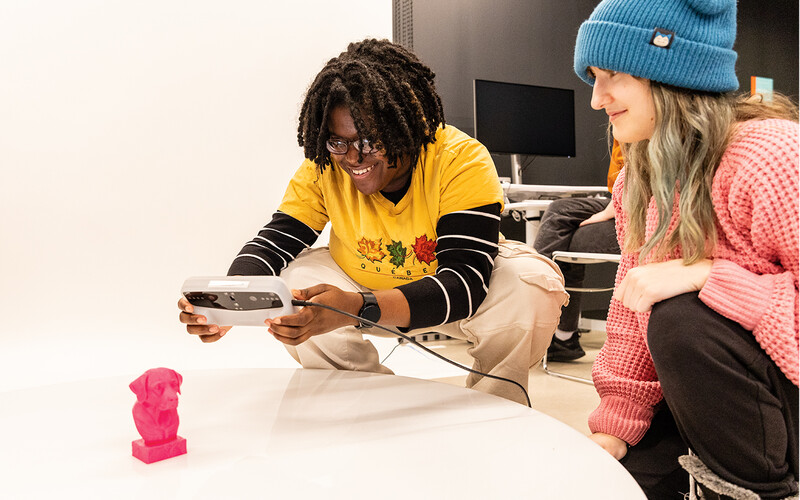
The IML has found a strong partner in the nearby Fatima Family Center, which offers programs and services for members of the community. Since before its opening, the IML has hosted youth groups from Fatima, who create podcasts and music videos in the IML’s studios and hear from school professionals about careers in the digital arts.

“It’s been fantastic to get the latest and greatest tools in the hands of these young, aspiring artists and designers,” McKenna says.

Arizona State University Facility Offers Public Resources

Different schools approach new media centers at different scales. It’s safe to say that Arizona State University’s Media and Immersive eXperience Center went big.

A partnership between the university and the city of Mesa, ASU’s MIX Center offers an unmissable example of community connection: a massive, 77-foot LED screen on the center’s exterior, which both the school and city can use to show movies, sports or other programmed content. Inside is the center’s four-story, 3,200-square-foot Enhanced Immersion Studio, which staff compare to a famed Las Vegas venue.

“It’s like the Sphere, but on a more intimate scale,” explains Ryan Pottle, director of center technology operations. “We’re combining ambisonic audio, 360-degree projection and LED video into a fully immersive storytelling environment. That’s what really lights up students and community members when they step into the space.”

WATCH: USC’s Digital Creative Lab brings broadcasting tech to students.

Overall, the sprawling, 118,000-square-foot MIX Center, which opened in 2022, brings together film production, immersive media design, game development and cutting-edge research in a single, purpose-built environment. The entire first floor is open to the public, and community members can access various other spaces for events, education and collaboration.

“We have a Community Action Board dedicated to hosting public events at the building,” says MIX Interim Director Shawn Lawson. Among other initiatives, the board screens movies on the center’s exterior video wall for viewers in the adjacent park. “Over the three-plus years we’ve been open, community engagement has been mission-critical and grown into a series of annual events that draw community members of all ages.”

The MIX Center maintains technical staff to help community members operate the digital tools available to them. And moving forward, ASU and the MIX Center are developing nondegree courses the public can take.

Of course, ASU students especially benefit from all of the innovation. With help from partners, the school has launched one of the nation’s first drone production classes.

“Students now have this direct pathway,” says Pottle. “They can come into the MIX environment, use the technology and immediately move into a career that otherwise feels ethereal at this point. It’s so cutting-edge, but really, we’re just experimenting and having fun being storytellers.”

Kennesaw State University Drives User Experience Research

The Center for Interactive Media at Georgia’s Kennesaw State University started small but ambitiously. Launched in April, CIM was established to address increasing demand for skilled professionals in the state’s gaming and immersive technology sectors, while also advancing interdisciplinary research into user experience in interactive media. It sits in a new building on KSU’s Marietta campus with a full gaming studio and high-end motion capture lab.

Interim Director Victoria Lagrange is a KSU English professor teaching game narrative design and explains that CIM focuses on understanding human-centered design, ethical artificial intelligence integration, immersive storytelling and the real-world application of interactive media.

UP NEXT: Modern audiovisual solutions can simplify classroom management.

“We’re creating partnerships with industry to fund some of the projects within the center,” she says. “When everything’s established, we want to bring in people from the community to participate.”

KSU’s CIM has close ties with the Georgia Game Developers Association and Georgia Public Broadcasting.

Among the first fruits of all of this collaboration is the CIM’s Transformer 2026 conference, held in February. The conference, which drew Amazon Web Services as a founding sponsor, attracted participants from across the country to discuss artificial intelligence and the future of game design.

“We’re excited for students to explore these things in a dedicated center,” Lagrange says. “As we go forward, it’s important to have a space where research is seen and experienced.”

Photography by Amber N. Ford