






“In the old days, you needed separate video, audio, power and control cables just to get a simple classroom working,” says Way, UCLA’s executive director of digital spaces. “With networked AV, you have one connection that can pass all of that information. Your network switch becomes the hub of your entire system. That means cost savings, labor savings and flexibility.”
Colleges and universities are beginning to upgrade their classrooms with AVoIP platforms. Many institutions are taking a phased approach, incorporating AVoIP in new buildings, or as existing equipment reaches end of life and budgets allow.
“There typically isn’t a budget to forklift and replace all of them, so you’re going to be managing a mixed environment no matter what you do,” says David Danto, principal analyst at TalkingPointz.
Vendors are increasingly supporting AVoIP natively in their products, he says. Cameras, microphones, speakers and touch panels can connect over standard Ethernet (RJ45) ports, support Power over Ethernet and run entirely over CAT 6 cabling, which eliminates the need for separate power, control, and signal lines and the distance limitations of HDMI.
Because every room uses the same cable type and network infrastructure, classroom designs become repeatable and easier to build at scale, Danto says.
DISCOVER: AVoIP helps institutions modernize their learning experiences.
UCLA’s “Smart Campus” Approach
Way oversees UCLA’s campuswide AV technology, including classroom environments, live production, conference rooms and digital signage. He spent his first year auditing spaces, building a team and developing a strategy with the university’s Teaching and Learning Center and Facilities Management.
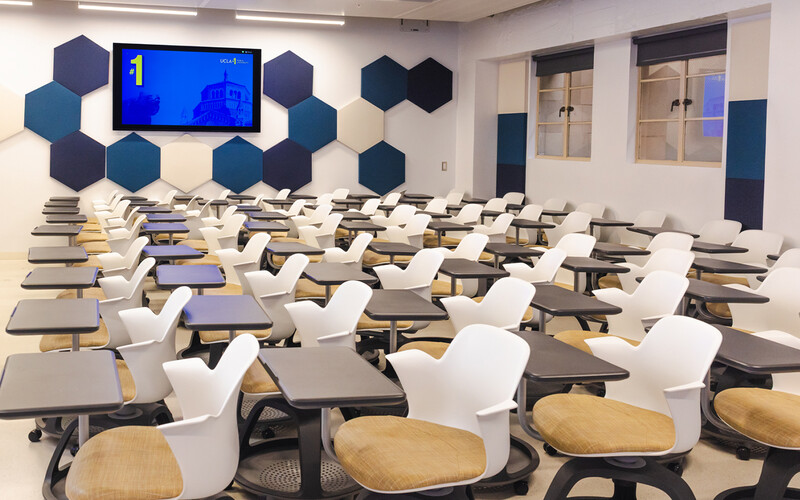
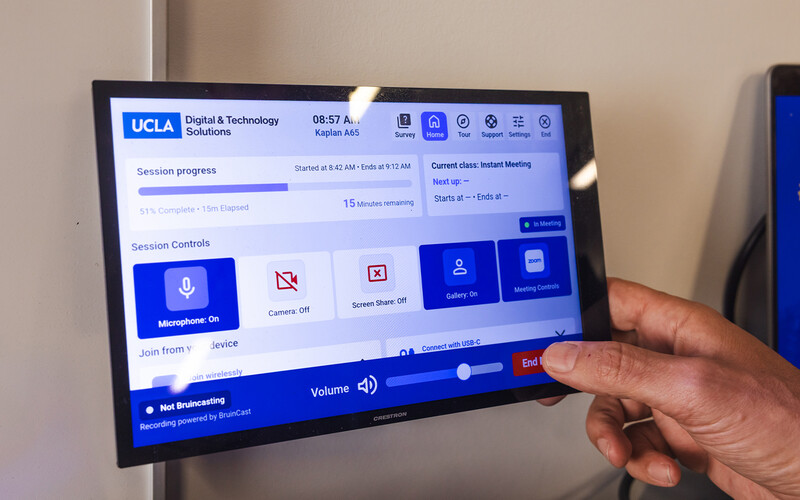
Each classroom modernized as part of the pilot project features flexible, movable furniture; large Sony displays and Panasonic projectors that project onto wall panels that double as writing surfaces; and speakers, Sennheiser ceiling microphones and Crestron touch panels, all selected through a multi-tiered request for proposals process.
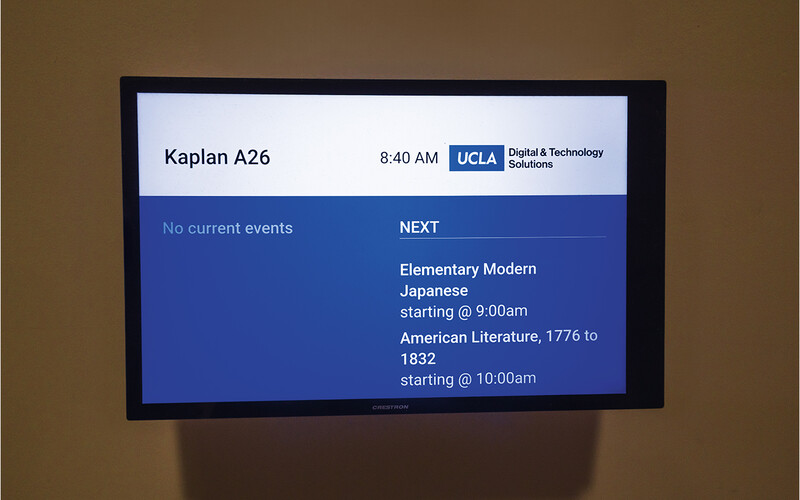
Tying everything together is cloud-based smart campus software that integrates AVoIP equipment and automates the classroom environment.
The platform is overlaid on a proprietary, custom, in-house AV control system on BruinCloud, UCLA’s private cloud. It runs on top of the smart campus software and encodes and decodes audio and video streams, delivering a signal directly without the normal encoder/decoder barriers.