


Jul 14 2026
Classroom

K–12 Students Learn Broadcasting Skills With Classroom Tech

As schools embrace new media tech, students gain career-ready recording and editing skills.

Washington’s Mercer Island High School introduced instruction in the art and science behind podcasting as part of its curriculum about seven years ago, just as the medium started to gain widespread popularity.

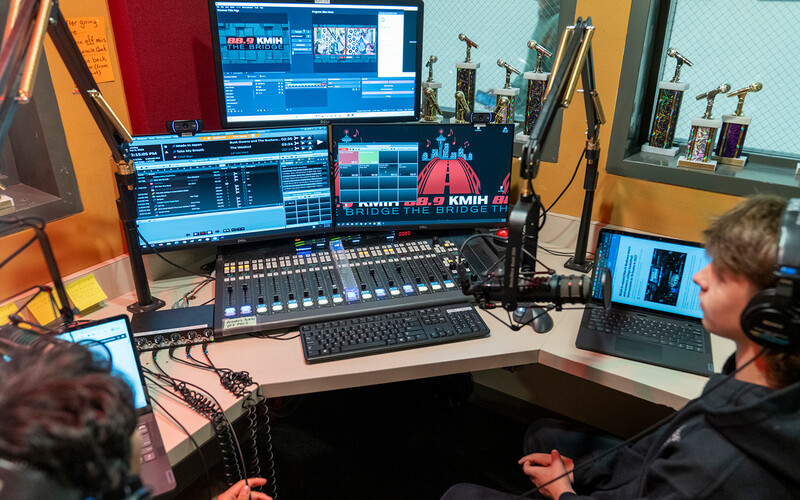
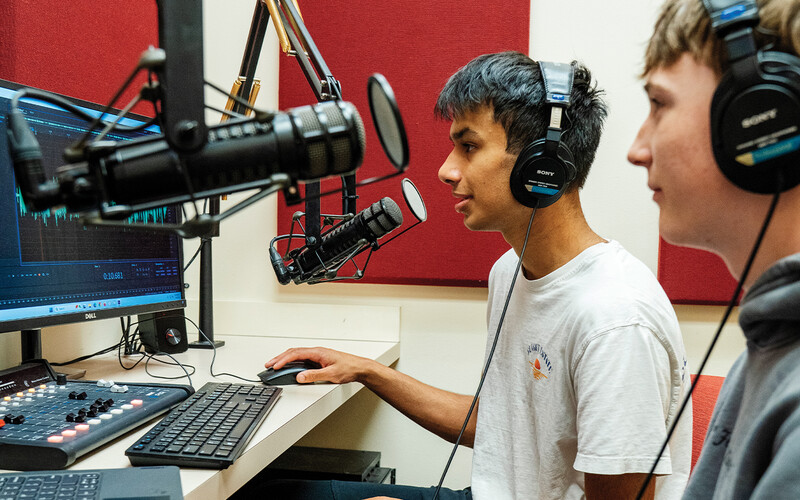
MIHS Students in the school’s radio and podcasting program have the opportunity to gain firsthand experience operating recording studio equipment and contributing to the district’s FCC-licensed radio station, KMIH 88.9 FM The Bridge.

“Students develop skills to formulate an introduction, perform background research, make an interview sound great on the airwaves,” says Natalie Woods, broadcast media instructor and community outreach manager at KMIH. “It’s really rewarding to watch what students develop and become with this kind of platform.”

The experience students gain mirrors what’s needed to break into and succeed in the broadcasting and journalism field, she says.

Many schools now choose to supplement traditional classroom instruction with training on microphones, mixing boards and other recording studio technologies as a way to help them learn essential STEAM skills.

Click the banner below to find tools for building a modern learning environment.


High-Tech Studios, Unique Learning Experiences

MIHS students use Adobe Audition editing and mixing software to create audio podcasts and leverage open-source video recording software for multimedia versions, Woods says. They use Zoom to conduct interviews for podcast topics spanning everything from local food hotspots to tips and strategies for self-improvement.

In early 2026, the school spent just shy of $3,000 to reconfigure nearby empty office space into a new podcasting resource.

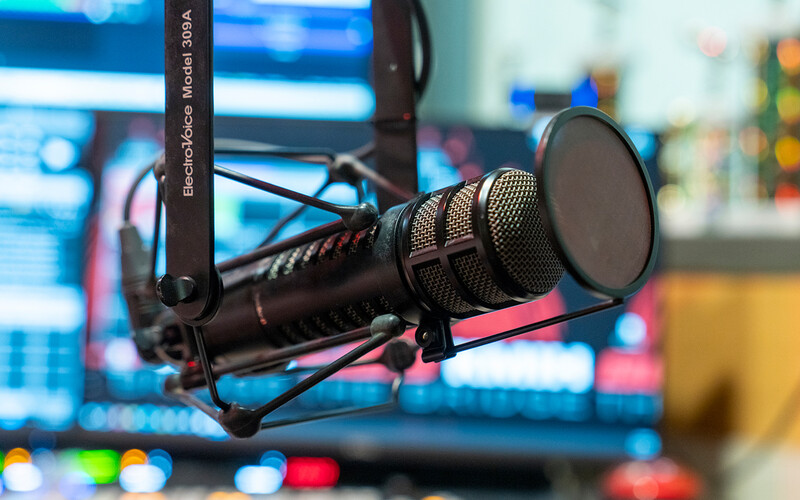
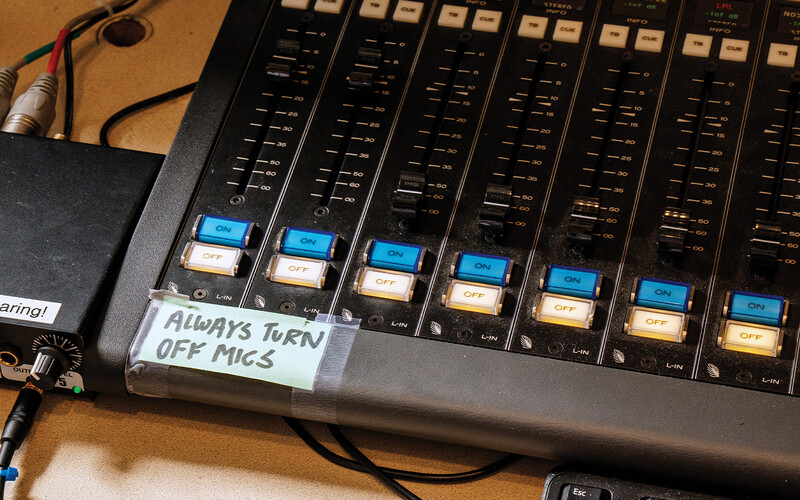
“We put in a fully functioning podcasting studio with a switching board, sound panels and professional-grade microphones,” Woods says. “Everybody is over the moon because kids are walking in there and instantly working in a professional podcasting environment.”

At Bradley County Schools in Cleveland, Tenn., students and teachers use the Jim and Carolyn Williams Recording Studio in the district’s Partnerships in Industry and Education Innovation Center, which also houses career technical education resources, says Innovation Specialist Josh Morris.

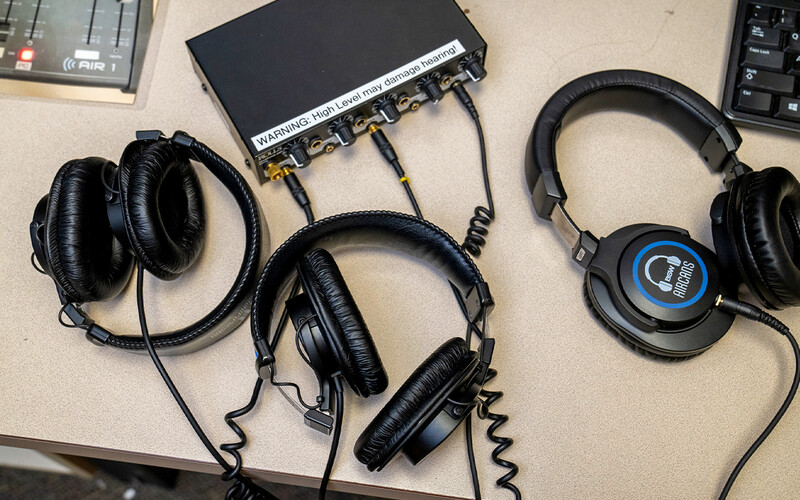
The studio includes sound booth rooms and tech tools such as microphones, Shure’s SCM268 four-channel microphone mixer and headphones.

They typically record shows using open-source audio recording software. Any content the program’s students record remotely may be sent via a podcast production studio board to a microSD card or routed to Adobe Audition to edit. 

They also record and format videos using Logitech Mevo streaming cameras, a Dell UltraSharp 27-inch monitor and TriCaster production solutions for video mixing, Morris says.

He co-hosts The Tech Flush, a technology-focused podcast for educators, and has offered help to encourage more teachers to use the space, such as by asking students to communicate their understanding verbally rather than solely through written work.

“Podcasting is a great way to reflect on knowledge,” Morris says. They “think about and voice those thoughts out loud. It’s another way of processing information; sometimes you gain a deeper understanding.”
Podcast Initiatives Fuel Student Interests

Education research increasingly shows that student podcasting can improve literacy and facilitate critical thinking.

Students build valuable soft skills by collaborating with partners, says Alfonso Mendoza Jr., founder of the My EdTech Life podcast and a former honoree on EdTech’s annual influencer list. The teacher served as a district assessment coordinator in Texas; today, he works with Kami as a teaching and learning coordinator.

“It gives them the opportunity to be creative with what they’ve learned,” Mendoza says. The medium provides “an outlet for them to demonstrate learning, other than through a test or worksheet.”

Verbal-based assignments might resonate with students learning English as a second language, or those who generally feel more comfortable speaking than writing.

“I had a lot of students, especially emerging bilingual students, who may not be strong writers but are wonderful orators,” Mendoza says. “Podcasting is something different. It offers a glimpse into their thought process.”

While creating podcasts, students practice listening skills and learn how to present ideas in a professional manner, which often relates and helps within other disciplines, Woods says.

Many do “things that require knowing about current events, which taps into social studies,” she says. “We’ve got a student doing a politics podcast; it really does run the gamut, bringing in skills from other classes.”

Students can also flex their creativity. The MIHS broadcasting program allows students to make cover art for their shows, which Woods notes is a common streaming service requirement when uploading files.

“It’s been cool to see artwork associated with the content they’re creating,” says Lauren Schechter, who teaches an introductory radio class and serves as KMIH 88.9’s general manager. “Students are really thoughtful about the images they’re portraying.”

67%

Percentage of 18- to 29-year-olds — the largest demographic — who listened to a podcast in the past 12 months

Source: Source: pewresearch.org, “Podcasts and News Fact Sheet,”

Cost-Effective Tech Instruction

To produce the St. Louise de Marillac School’s morning announcements in Upper St. Clair, Pa., students use Canva and other graphic design tools to create slides that are used as visual elements, says Zee Ann Poerio, the school’s K–8 STREAM teacher.

They combine daily news information with elements such as a joke of the week, footage from school concerts and photos of student artwork, all set to music.

“Everyone has a job,” Poerio says. “I like to have them rotate positions because sometimes they don’t know what they might like to work on. They really work together, and it’s great to see people taking leadership roles and being proud of their work.”

The school previously livestreamed its 2- to 4-minute morning announcements segments but now records them, Poerio says. Recorded announcements gives students the option for retakes and to improve upon previous versions of their work. When students know they have a real audience, they are encouraged to do their best, she says.

She uploads the final version to a Google Drive repository as well as a dedicated page on the school’s website. After the daily bell rings at 8:20 a.m., teachers click a link to broadcast the announcements using their classroom’s Sharp interactive whiteboards.

“If you were busy or kids were late, people sometimes missed it,” Poerio says. “People can now scroll back and forth or replay it.”

The production doesn’t require a dedicated studio or extensive technology, but the STREAM lab does have a designated studio area in the back. Students use touchscreen tablets and wireless microphones, and record the main portion of the program using Poerio’s computer lab classroom.

Schools can often launch a podcasting initiative relatively easily, particularly when students simply use their phones.

“The barrier to entry is very low,” Mendoza says. “You can record yourself and upload it into your podcast platform or submit it to your teacher. On a lot of platforms, you can edit the transcript, like a Google Doc, and highlight and remove the filler words, like the ‘uhs’ and ‘ums.’”

The podcast production process could even be simpler than schools or districts anticipate, Mendoza says, and administrators may be surprised by the levels of student engagement that result.

“I see podcasting within the classroom having really good outcomes with students because it builds their confidence,” Mendoza says. “Student podcasting is not just about the equipment itself. They learn how to work with different applications, but the biggest gain is knowing their voice matters.”

M. Scott Brauer
Close

New Research from CDW on Workplace Friction

Learn how IT leaders are working to build a frictionless enterprise.