


Jul 28 2026
Security

Closing the Visibility Gap in K–12 IT With Observability

Traditional monitoring tools can no longer provide the visibility K–12 districts need. Observability offers a broader view across hybrid environments, helping IT teams connect performance, user experience and security.

A teacher has issues accessing a learning platform. Students struggle to log in to an online assessment. A classroom full of devices suddenly loses connectivity.

For K–12 IT teams, solving those problems has become increasingly complicated, with today’s tech environments spanning on-premises networking equipment, cloud-hosted applications, Software as a Service (SaaS) platforms and thousands of endpoint devices spread across multiple schools. When an issue occurs, the root cause could reside almost anywhere.

That complexity is pushing many districts to look beyond traditional monitoring tools and toward observability platforms providing a broader view of how systems, applications and users interact.

Click the banner below to discover how an upgraded IT infrastructure improves performance.


Massive IT Infrastructure Means Too Many Places to Look

While technology teams have never had more information available to them, the challenge is the information often exists in separate places.

Matthew Leger, senior research manager for IDC worldwide education digital strategies, says the biggest visibility gaps tend to emerge where traffic moves between environments.

Districts can generally monitor activity on their own networks and servers, but visibility often diminishes once users move into cloud platforms or SaaS applications. At the same time, many districts manage tens of thousands of devices across multiple campuses.

As a result, IT teams frequently discover problems only after teachers and staff begin reporting them.

“IT teams typically learn about problems only after a wave of help desk tickets arrives,” Leger says.

Scott Ragsdale, vice president of sales for healthcare, state and local, and education at Nutanix, says the problem is often not a lack of monitoring tools but a lack of visibility across systems.

“When a teacher says a platform is frozen, IT ends up chasing the issue across Wi-Fi, infrastructure and cloud providers, instead of seeing the problem end to end,” he says.

Connecting the Dots Between Monitoring and Observability

Traditional monitoring tools are designed to identify known problems. Observability is designed to help answer questions that were never anticipated.

Leger says monitoring relies on predefined thresholds and alerts. Observability combines metrics, logs and traces from across the environment, allowing technology teams to investigate unexpected issues and understand how events in one system affect another.

That distinction matters in hybrid environments, where a performance problem might involve a network path, a cloud workload, an application configuration issue or all three simultaneously.

“Traditional monitoring tells you when something is broken,” Ragsdale explains. “Observability tells you why.”

Vikram Murali, vice president for observability development at IBM, says observability brings together information from infrastructure, applications, networks and user activity into a single operational picture.

“The biggest gap is understanding how all of these components interact with each other,” he says. “A modern observability tool perspective connects all of these siloed areas.”

Seeing What Students See

For district leaders, infrastructure metrics matter only if they affect teaching and learning.

Leger says latency and packet loss often have the greatest instructional impact because applications such as videoconferencing platforms and online assessments are particularly sensitive to network performance.

Throughput becomes especially important during testing windows and other high-demand periods. Rising error rates can also provide advance warning before a service interruption becomes visible to users.


Vikram Murali
The biggest gap is understanding how all of these components interact with each other. A modern observability tool perspective connects all of these siloed areas.”

Vikram Murali VP Observability Development, IBM Automation

Ragsdale says he believes districts should focus on measurements that directly affect the classroom experience.

“Focus on application latency,” he says. “If an LMS or testing platform takes 30 to 45 seconds to respond, you’ve already lost the student’s attention.” 

Login performance is equally important. Delays accessing applications or devices may seem minor in isolation, but across hundreds of classrooms they can consume significant instructional time.

Observability Does More With Less

Most district technology departments operate under tight budget and staffing constraints. Leger notes that observability can help reduce the gap between when a problem begins and when IT becomes aware of it.

Modern platforms use anomaly detection to identify unusual behavior automatically, reducing the need for administrators to manually review dashboards and logs. Historical baselines and incident timelines can also help districts retain institutional knowledge as staffing changes occur.

DISCOVER: Districts measure cybersecurity value beyond money saved.

Murali explains that observability is increasingly paired with automation that helps small teams work more efficiently.

Solutions can reduce alert fatigue, accelerate root cause analysis and automate routine remediation activities. Instead of spending hours determining where a problem originated, technology teams can focus on resolving it and restoring service.

“The biggest return on investment comes from preventing outages,” Murali says.

Spotting Trouble Earlier

Observability is also becoming an important cybersecurity tool as K–12 districts remain attractive targets for ransomware groups and other attackers.

Many security incidents involve adversaries who remain inside a network for extended periods before being detected. Better visibility can help shorten that timeline.

Rather than looking only for known threats, observability platforms focus on identifying behavior that falls outside established patterns.

Unusual network traffic, unexpected system activity or devices behaving abnormally can all serve as early indicators that something is wrong.

“The goal is to move from reactive incident response to proactive risk detection,” Murali says. “That can be possible only if you have an observability solution that can tie all these different silos together.”

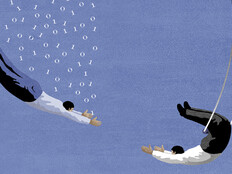
Goodboy Picture Company/Getty Images
Close

New Research from CDW on Workplace Friction

Learn how IT leaders are working to build a frictionless enterprise.