A new quantum computing technology campus is on its way to Chicago’s South Side, and local K–12 students were recently given the chance to design their own versions.
When completed, the Illinois Quantum and Microelectronics Park (IQMP), currently planned for construction in the city’s South Chicago neighborhood, will be a 128-acre campus that serves as a global center for quantum-enabled research and technology development. The campus will bring jobs in quantum computing to the region, and Chicago Public Schools leaders are already thinking about how to prepare their students for the quantum future.
This year, the district’s annual Minecraft Education competition — known as Chi-Craft — was centered around the IQMP. Students were tasked with building their own versions of the park to help them learn more about the technology center being built in their community. Across the preseason and main season, students completed a series of build challenges that layered on each other in preparation for the finals.
Throughout the season, professional development opportunities for teachers allowed them to learn concepts of quantum computing that they could pass along to their students. Students were also able to meet with the Meghan Dyer, lead designer of the IQMP, to ask questions to help inform their builds.
Click the banner below for tools to modernize your classroom experience.
“I want the students to learn that they are capable of engaging and learning about the new technologies that will impact their future,” says Kristan Beck, director of computer science for CPS. “They need to know about the opportunities that this provides to their communities. They can choose to go into quantum physics and computing or not, but they can participate in an informed way about the impacts this will have on their community and society at large.”
More than 80 schools participated in the Chi-Craft season, with the top 34 teams advancing to the finals. Katrina Miller, computer science program manager for CPS, said 30 teams across 17 schools attended the finals event, held April 25.
Students Present Minecraft Worlds and Build in Live Competition
Held at Chicago State University’s Gwendolyn Brooks Library, less than five miles from the planned IQMP site, the finals brought together students, parents, coaches, teachers and community partners for a daylong competition.
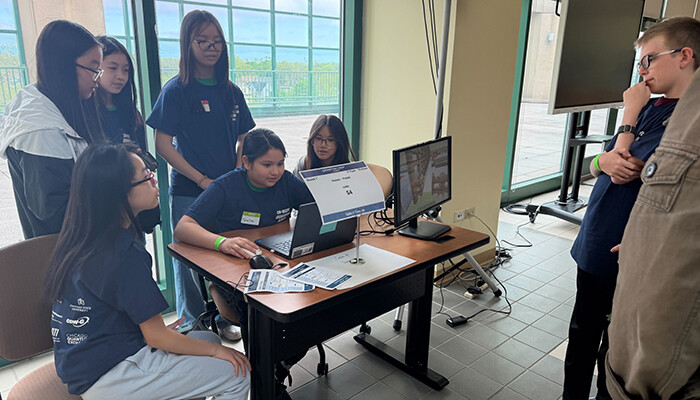
Finalists were split into two groups; while one set of teams competed in the live build, the other presented their completed Minecraft worlds in science fair–style presentations throughout the library. Students gave attendees virtual tours of their versions of the IQMP and explained the key elements that make their worlds quantum ready. Attendees voted on their favorites in each category: the most Chicago-like build; the build that best represents a possible IQMP design; the most visually appealing; and the build with the best Redstone, MakeCode or Commands.
Students from John C. Haines Elementary School present their quantum park.
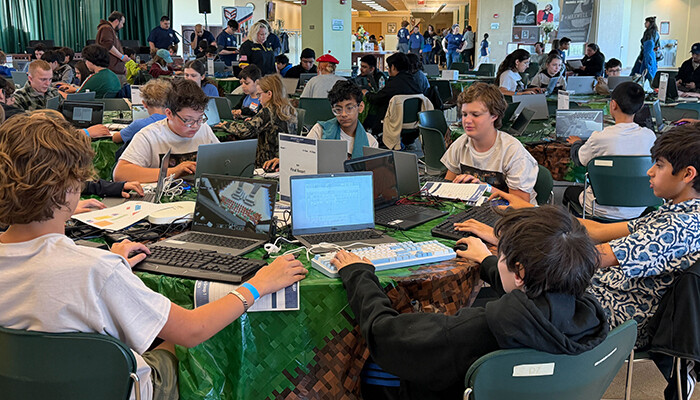
For the live competition, teams seated around tables were given a prompt instructing them to construct the technology, defenses and infrastructure that a future anti–artificial intelligence resistance would need. They were transported to a build area near an AI data center and given 20 minutes to imagine and build this resistance. After the time expired, a new objective instructed students to build something equally impressive to stop the resistance.
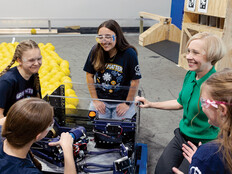
The finalist teams completed a two-part live build challenge.
Students’ builds were saved, and a panel of judges scored them based on both parts of the challenge.
Panelists Share Lessons Learned and Big-Picture Takeaways
Following the competition, fireside chats with students and community partners gave insights into the lessons the competition taught participants and the longer-term impacts early access to quantum education can have on students in the Chicagoland area.
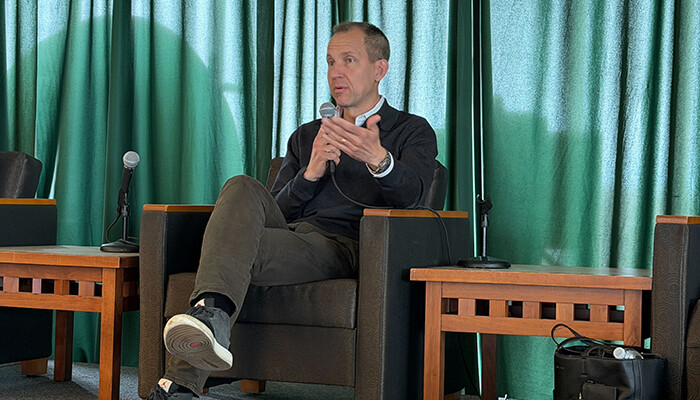
Nick Lucius, CIO of the city of Chicago, said he loved computers when he was young, but he couldn’t see a bridge between what he loved and what he could do in the future. This Minecraft competition, he said, speaking directly to the students in the room, is that bridge for them.
“What you did this year is a really big deal,” he said. “You designed a quantum computing campus, possibly the most consequential innovation of our lifetimes, in a leading quantum city. You weren't just playing a game; you are practicing something much bigger. You are practicing being architects, problem-solvers, innovators. That is what you are.”
Nick Lucius, CIO of the city of Chicago, emphasized that students’ curiosity and creativity have already made them part of Chicago’s technological future.
Students shared what they learned about quantum computing after participating in the competition.
“I think quantum computing is a really cool new technology that's emerging, that's kind of flipping traditional computing on its head,” said Olive Eltink, a junior at Lane Tech College Prep High School.
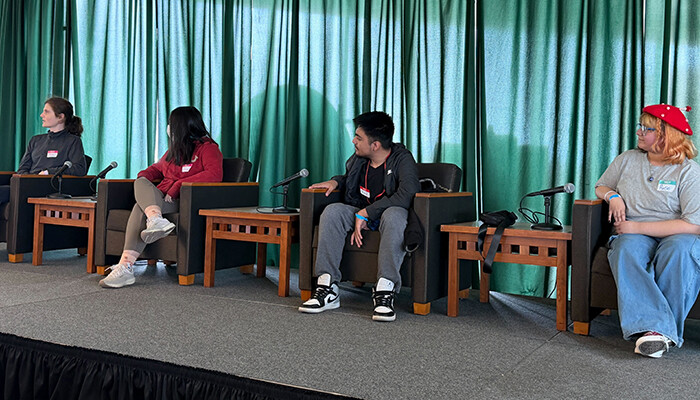
Other students said they’re continuing to understand more about quantum computing and shared challenges they faced experimenting with different environmental and architectural choices in their virtual parks. They also reflected on the desire to make their parks welcoming rather than intimidating, and how the project pulled in their unique and diverse interests.
Students from Lane Tech College Prep High School and Charles A. Prosser Career Academy spoke about their experiences competing in the Chi-Craft finals.
Representatives from CPS, the IQMP and City Colleges of Chicago spoke about the larger opportunities available to students as early as elementary school.
For high school students, Saturday Morning Quantum is a 10-session weekend course, delivered in partnership with Fermilab, that gives students hands-on experience with quantum topics and creates pathways to real-world opportunities. CPS also partners with Grainger and ComEd to develop pre-engineering pathways for students.
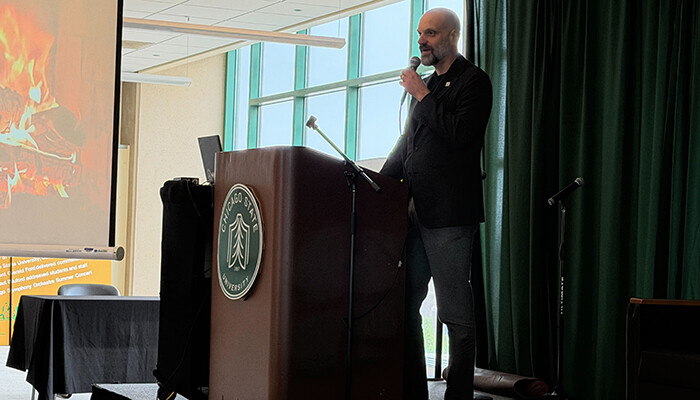
Harley Johnson, executive director and CEO of the IQMP and an engineering professor at the University of Illinois Urbana-Champaign, spoke about the soft skills students will need to be successful in these tech fields.
“No. 1 that I want to emphasize is collaboration, and I saw that in abundance in the presentations today,” he said. “Think about what you can be an expert in and then get on a team because you’ve got to know how to collaborate. It's not easy, but collaboration is what really makes things happen. Presentation skills are important, but the work that gets done is being done in teams.”
Harley Johnson, CEO of the Illinois Quantum and Microelectronics Park, addressed students and attendees of the Chi-Craft Quantum Leap Finals.
Just as important as educating students about the quantum future is ensuring teachers are prepared to deliver relevant lessons, said Myron Hester, chief of schools for CPS Network 17.
“How do we first get our teachers and our principals educated about this new wave of quantum physics that's coming to our community?” he said. “How do we provide the professional development for educators? We've already launched one professional development in partnership with Chicago State and their professors. The groundwork must start there, and then once we get the educators and the teachers going, then that information can trickle down to our students.”
Access to information and opportunities is just as important as education, Hester said.
UP NEXT: K–12 schools should invest in teaching quantum computing today.
“Let's continue to spread the word,” he said. “I always look at who's not in a room, and how can we make sure that every demographic, race, ethnicity, gender are in this room to be exposed to it so they can have opportunity to even think about going into one of these career pathways.”
Students then received awards for their work throughout the season and at the afternoon’s event.
As construction on the IQMP is slated to begin this fall, CPS leaders look forward to what the future holds for the quantum pathways available to students.
“I think this is only the beginning,” Beck says. “This project shows that if we are creative as educators, we can find the ways to make understanding quantum computing accessible and engaging for our students and teachers. I'm really excited about the possibilities.”