





Challenge No. 1: Casting a Wide Net
Briggs says it can be challenging to make esports available to a wide range of players. “I grew up as an athlete. I also loved gaming,” he says. “Now there’s a future in it — you can get a scholarship to go play a video game — and so it makes sense to include everybody.”
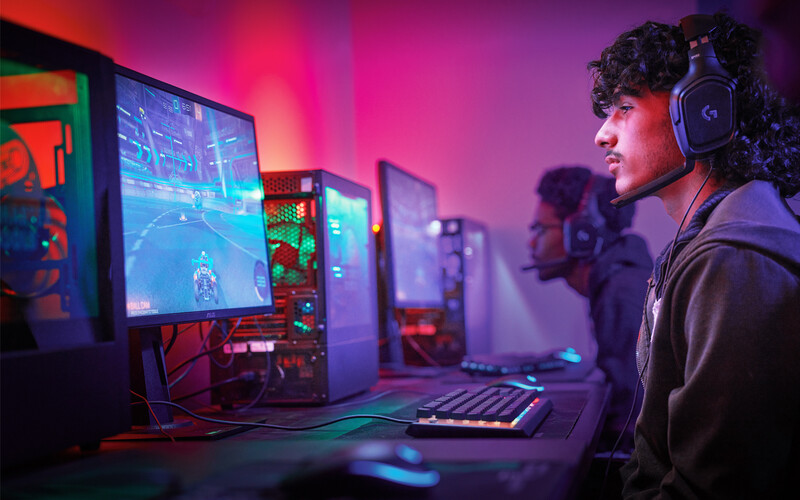
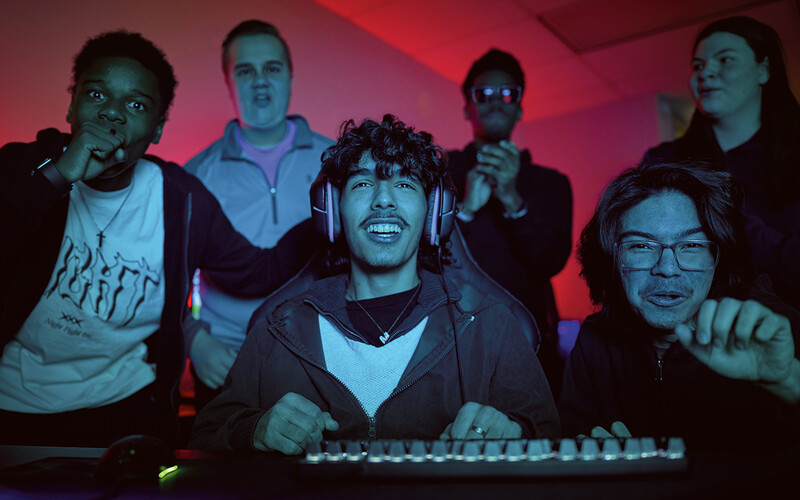
To that end, the school’s program, which was established about four years ago, runs along several tracks. A varsity team competes at the state level, and students also play competitively through Oklahoma At Home (OATH) Esports. In addition, “we also have our Epic Game Club — that’s the fun side of it,” Briggs says.
The school partners with gaming platform LeagueSpot to manage the game club. “They do a great job of helping us reach as many kids as we can,” he says. And that outside partnership also helps to strengthen other aspects of the esports program: “It gives me and my coaches more time to focus on the varsity team.”
Challenge No. 2: Facilitating Team Play
At Rural Virtual Academy, an online school in Wisconsin, kids sometimes use Nintendo and MSI devices to participate in hosted esports events at a remote learning center, but many also compete from home. Middle school teacher Jesse MacDonald needed a way to make home play a collaborative team experience. His solution is to run everything on Zoom.
“We have five coaches, and they log in to a Zoom room. We set them into breakout rooms by team or grade level,” MacDonald says. “If they want to show the gameplay so that everybody can see it, they can broadcast it right in there.”
This approach helps to create a cohesive team experience for far-flung participants. MacDonald says that Zoom allows those at home to communicate with teammates and coaches. “It also allows us to broadcast our games for spectators,” he says.
In games likes Super Smash Bros., spectators in the game space can cause play to lag. The Zoom broadcasts help ensure players can connect in real time, without spectators’ bandwidth use slowing the game play. “You don’t want to put too many people in a Smash arena,” MacDonald says. “This allows the whole team to watch.”