





EDTECH: Since 2019, UND has had a 60% increase in students taking online classes only, and a 98% increase in students attending online and in person. What’s driven that growth?
HOLM: COVID-19 was a big factor. Compared with some universities, we were well prepared to transition online in spring 2020. Our administration had invested in online course development, and that helped us tremendously to come out of the pandemic and be successful. In addition, UND’s Teaching Transformation and Development Academy leads professional development and supports course development, so for many years, we’ve had a strong, relatively large group available to help faculty use the technology we had. Also at this time, we increased our online undergrad programs significantly. By the end of the pandemic, we had more professors who were able, willing and eager to teach online, and our students had good experiences with it too.
EDTECH: How does UND differentiate its online and hybrid programs from those of competitor institutions?
Holm: I go back to our strategy of starting with what we do well and growing from there. We are well known in engineering and provide a greater diversity of online engineering programs than other universities. One way we do that is by putting our labs in an intensive summer experience, so students come here once or twice during their program. Early on, we created one of the first online master’s programs in space studies, and another in forensic psychology. Both programs became well known and are still two of our largest master’s programs. We’re always asking what we can do differently, and each of our programs strives to do that.
EDTECH: How does UND prioritize engagement and support for online students?
Holm: We encourage all of our programs, including those online, to have experiential learning, work-centered learning, internships and other activities that connect students with each other and with potential employers. We also use CircleIn, a student-led platform for collaboration and group study. When a course is active on CircleIn, success rates increase, so this helps students engage, get a well-rounded experience and be successful.
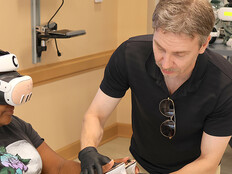
DISCOVER: Modern technology enables hybrid classrooms.
In larger cities around the country, we host watch parties for athletic events and invite online students. Graduation is a virtual event as well as an in-person one. We offer extensive student support services and success coaches. In addition, we always consider how our decisions will affect online students. Online can’t be an add-on. If this is what you do, then everything you do has to take that into consideration.
EDTECH: The North Dakota University System needs in-state and out-of-state students to sustain its 11 institutions. How does UND attract out-of-state students?
HOLM: To reach students outside North Dakota, we do targeted media buys about the university and online opportunities in general. Each year, we make strategic investments to market specific programs that are growing and doing well, online or on campus.
In addition, UND has a large nondegree online enrollment through our Self-Paced Enroll Anytime courses. It’s a way to reach people who are looking for something different than a full online program. Some of those students will eventually enter a program here, but many won’t. However, it’s advantageous because it draws attention to our program. We have data that suggests that out-of-state students in our online program are almost as likely to end up working in North Dakota as students who are in our on-campus program.