Jan 05 2026
Security

Access Control Keeps School Safe From Unwanted Guests

Districts bolster physical security by screening guests with visitor management software and integrating that with door access control and surveillance cameras.

When IT Services Director Bob Fishtrom arrived at Mountain View-Los Altos Union High School District in 2019, the Silicon Valley district desperately needed to modernize its physical security technology.

Managing visitors at MVLA was a manual process; people signed in on paper ledgers, and there was no way to track them or verify their background. Security cameras were outdated, and door access control was not user friendly, with a Windows 3.1-style interface that required 40 hours of training to operate. 

In fact, when a restroom was vandalized and an assistant principal needed to lock it down for investigation, the administrator couldn’t remember how to use the system. 

Click the banner below for more information about school safety solutions.


The IT department has since transformed the district’s physical security infrastructure into an integrated, easy-to-use Verkada solution that provides district leaders with a single software console to seamlessly manage visitors, monitor cameras and lock doors remotely. 

“Having this level of sophistication is important,” Fishtrom says. “If there’s a security incident at a door, we have a camera pointed at it. Everything is in one place, and everything works together.” 

Identity management and access control are important elements of K–12 cybersecurity, but they also play a huge role in physical security. Visitor management systems ensure only authorized individuals enter school property, while access control solutions ensure they access only the spaces they are permitted to enter. Combined with security cameras, the technology helps districts keep unwanted guests out while monitoring approved guests inside.   

Districts are increasingly adopting unified life safety systems with integrated cameras, access control and visitor management systems to bolster security, says Guy Grace, vice chairperson of the Partner Alliance for Safer Schools.

Alarms and communications are also important components of an integrated system; emerging tools include weapons detection, vape sensors and biometric access control, he says. 

“It’s all about a unified life safety approach. These technologies combined can tremendously reduce the risk of having an active threat do great harm to your district,” Grace says.

Technology Helps Schools Manage Visitor Access

MVLA took a phased approach to upgrading security at its two high schools. In 2020, the district replaced 275 aging cameras with a Verkada solution featuring 4K cameras, AI-powered video analytics and cloud storage. 

In 2023, MVLA added Verkada’s door controllers, visitor management software and vape sensors — all managed through the same cloud-based dashboard. The district has since expanded to 400 cameras. 

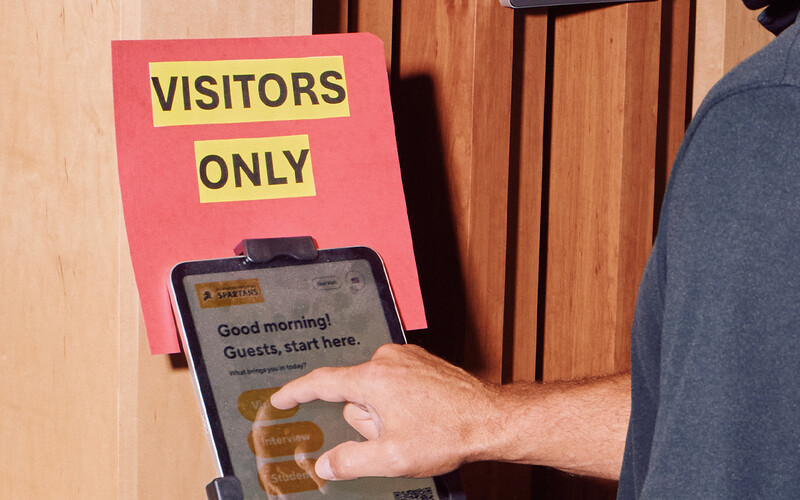
At each high school’s main office, visitors sign in on kiosks running Verkada Guest software. The tablets take photos and scan driver’s licenses, and the software checks guests against criminal databases and internal watch lists (such as parents restricted by custody orders from seeing their children). 

Flagged visitors are denied access, while approved guests receive printed badges. They select the staff they’re visiting, which sends text notifications to their hosts. Cameras allow administrators to review visitor movements when necessary.  

“The new system presents a safer, more accountable approach,” Fishtrom says. “It provides that layer of visibility.” 

MVLA manages 550 doors through Verkada controllers and wireless hubs that connect existing locks to the Verkada system. 

With Verkada Command software, district and school leaders can activate campuswide lockdowns, lock specific sections and give police temporary camera access in emergencies. Blinking red lights on locks indicate doors are locked, providing teachers visual confirmation.

Bob Fishtrom
The new system presents a safer, more accountable approach,” Fishtrom says. “It provides that layer of visibility.”

Bob Fishtrom IT Services Director, Mountain View-Los Altos Union High School District

Administrators also use access control to manage door schedules. Schools automatically unlock entrance doors at 8 a.m. and lock them again at 4 p.m. on school days, a job custodians used to do manually. School leaders create custom schedules for holidays or weekend testing.  

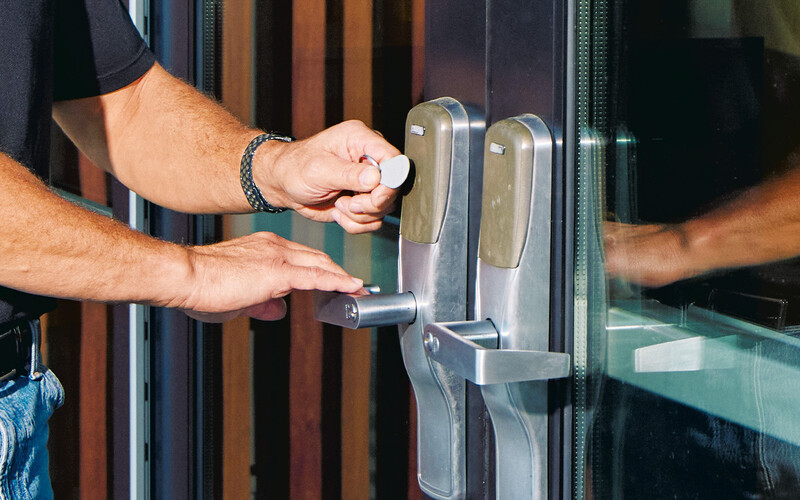
With Active Directory integration, administrators also program key fobs for staff, providing access to entrances, common areas and their assigned classrooms or offices. On one campus, the food services department receives deliveries twice a week, from 4 a.m. to 8 a.m. Instead of giving the delivery company a key, which would create a liability, the district gave the company a key fob to access one door. When a faculty member recently forgot her key fob one weekend, she called Fishtrom, who let her in remotely.

“I logged into Verkada from my phone and unlocked her classroom door in five seconds. That’s how awesome the system is,” he says. 

Video analytics detect persons of interest and when virtual boundaries are crossed after hours, sending automatic alerts to staff. When vape sensors detect activity in restrooms, administrators receive texts and can view cameras pointed at bathroom entrances to identify students.

Overall, Fishtrom says, modernizing the physical security at the 4,400-student district has made a huge difference. The new system takes only 20 minutes to learn, compared with 40 hours on the old system. 

“Schools need to be ready for any security situation that might arise, so having this level of sophistication combined with ease of use is really important,” he says.

SUBSCRIBE: Sign up to get the latest EdTech content delivered to your inbox weekly.


La Cañada USD Transforms Culture With Safety Focus

In 2018, community members asked La Cañada Unified School District in California how it can ensure student safety.

A committee of parents, teachers, staff and law enforcement developed seven goals; among them, improved first responder response times, student wellness and safety and welcoming campuses, says Jamie Lewsadder, the district’s associate superintendent of tech services.

She turned their ideas into an action plan. The 4,000-student district prioritized fencing around its three elementary schools but focused on access control at its high school because its campus serves as a community park. 

La Cañada adopted a Verkada unified solution, taking a phased approach. In 2019, the district replaced antiquated door locks and an access control system that required a locksmith to visit doors to create staff access badges. It initially deployed a system from a different vendor but has nearly fully transitioned to an all-Verkada system. Now, administrators can quickly program access badges with a few mouse clicks.

“That has been a game changer for us, giving teachers and staff access as they need it, making changes superfast,” Lewsadder says.

97%

Percentage of public schools that control building access during school hours

Source: nces.ed.gov, “More Than One-Third of Public Schools Agreed Traffic Patterns Around Schools Pose a Threat to Student Safety,” June 12, 2024

In 2021, the district upgraded to new Verkada cameras, expanding coverage beyond perimeter monitoring to include entrances and hallways. They also deployed license plate readers and AI-powered analytics that provide person-of-interest and motion-detection alerts. 

The district also improved visitor management. Previously, visitors were allowed to walk into elementary schools and sign in on clipboards and binders. Now, the front doors are locked, requiring visitors to buzz Verkada intercoms for entry. 

Once front office staff let them in, the visitors sign in using Verkada Guest on tablets. The system captures photos, performs background checks and notifies staff that their visitors have checked in. Approved guests receive stickers. 

The integrated technology approach, combined with broader wellness and security initiatives, has created a culture shift that has improved school safety, Lewsadder says. 

“Safety and security are just part of our everyday culture, where before it was something we weren’t comfortable talking about,” she says. “It’s a safe and welcoming environment. We just want to know who’s here and that you’re safe.” 

RELATED: Rethinking security for K–12 after-school events. 

Securing School Entrances With Vestibules

Districts don’t have to deploy fully integrated tools from a single vendor to create an effective physical security solution. Ballston Spa Central School District in upstate New York demonstrates how stand-alone and partially integrated systems can work well together.

The 4,200-student district has deployed Axis Communications cameras, HID access control, HID EasyLobby visitor management software and an alarm system. 

About nine years ago, the district completed installation of secure vestibules at the entrances of its six schools. Front doors are locked, and visitors must ring an intercom. While the intercom isn’t directly connected to cameras, greeters inside can view the camera feed on monitors before buzzing them in, says Ed Martin, BSCSD’s facilities and security coordinator. 

When visitors enter the vestibule, greeters use the EasyLobby software from behind bullet-resistant glass to check them in, photograph them and scan their driver’s licenses for automatic background checks. Once approved, visitors receive printed badges and are buzzed through a second door into the main building. 

Administrators can activate lockdown protocols using wireless key fobs or fixed panic buttons underneath desks. The alarm system simultaneously triggers schoolwide lockdown announcements on the paging system, activates strobe lights, automatically closes fire doors and notifies its alarm company, who calls 911.

BSCSD recently deployed emergency response software that connects the district to first responders. The software integrates with the district’s alarms and cameras, so when a lockdown is triggered, county dispatchers and the sheriff’s department are alerted and given real-time access to the cameras. The software also enables smartphones to function as two-way radios, allowing district leaders to talk to law enforcement. 

“We’re proud of what we’ve got here,” Martin says. “Everyone knows that any money invested in security is money well spent.”


Photography by Andria Lo
Close

New Workspace Modernization Research from CDW

See how IT leaders are tackling workspace modernization opportunities and challenges.