EDTECH: How would you describe the connection between culture and technology at Highline Public Schools?
CHRISTIE: The Highline Promise guides our work. Every student is known by name, strength and need, and graduates are prepared for the future they choose. We come back to our promise whenever we are considering AI or another digital tool. I’ve made it clear to my team that our focus is keeping students at the center and supporting their success.
We ask ourselves questions: How will this decision affect our students and community? Who might face barriers? Whose perspective might be missing?
We also have a close relationship with our community. We listen to students, families and staff, and we use what we hear to shape our decisions.
EDTECH: How does the district’s student diversity shape your technology strategy?
CHRISTIE: Our diversity helps us think more broadly about the opportunities technology can provide for every student.
Processes are just as important as technology, and my team works closely with people who are really good at understanding process. We use data to determine our direction, although what’s most important is how we interpret the data and apply it to each student’s strengths and needs.
That ties back to our promise. Supporting every student is not a challenge; it is our purpose.
EDTECH: Which technology tools have served you well from a languages perspective?
CHRISTIE: We’ve invested in translation tools that use AI to support our conversations with multilingual families. Word-for-word translation is not always enough. We don’t want to just translate words and have choppy conversations. We want tools that translate meaning and intent, so we needed the ability to translate colloquial phrases, regional dialects and slang. We vetted these tools in our smaller pilots, and they worked very well. Our goal is not to replace personal communication or human judgment. It is to remove barriers; support clearer conversations; and help families stay informed, connected and involved in their schools
EDTECH: Does AI literacy look different for a student learning English versus a native English speaker?
CHRISTIE: Not necessarily, because we have refined our thematic focus around AI — the knowledge, skills and attitudes that we want students to develop — and those concepts are translatable. That makes it easy for us to communicate to students and families what we’re doing with AI.
EDTECH: What is Highline’s vision for AI strategy?
CHRISTIE: We’ve taken a thoughtful, community-informed approach rather than rushing to adopt new tools. Our first focus is AI literacy. We want students and staff to understand both the opportunities and the risks and what is needed in today’s world to be future-ready.
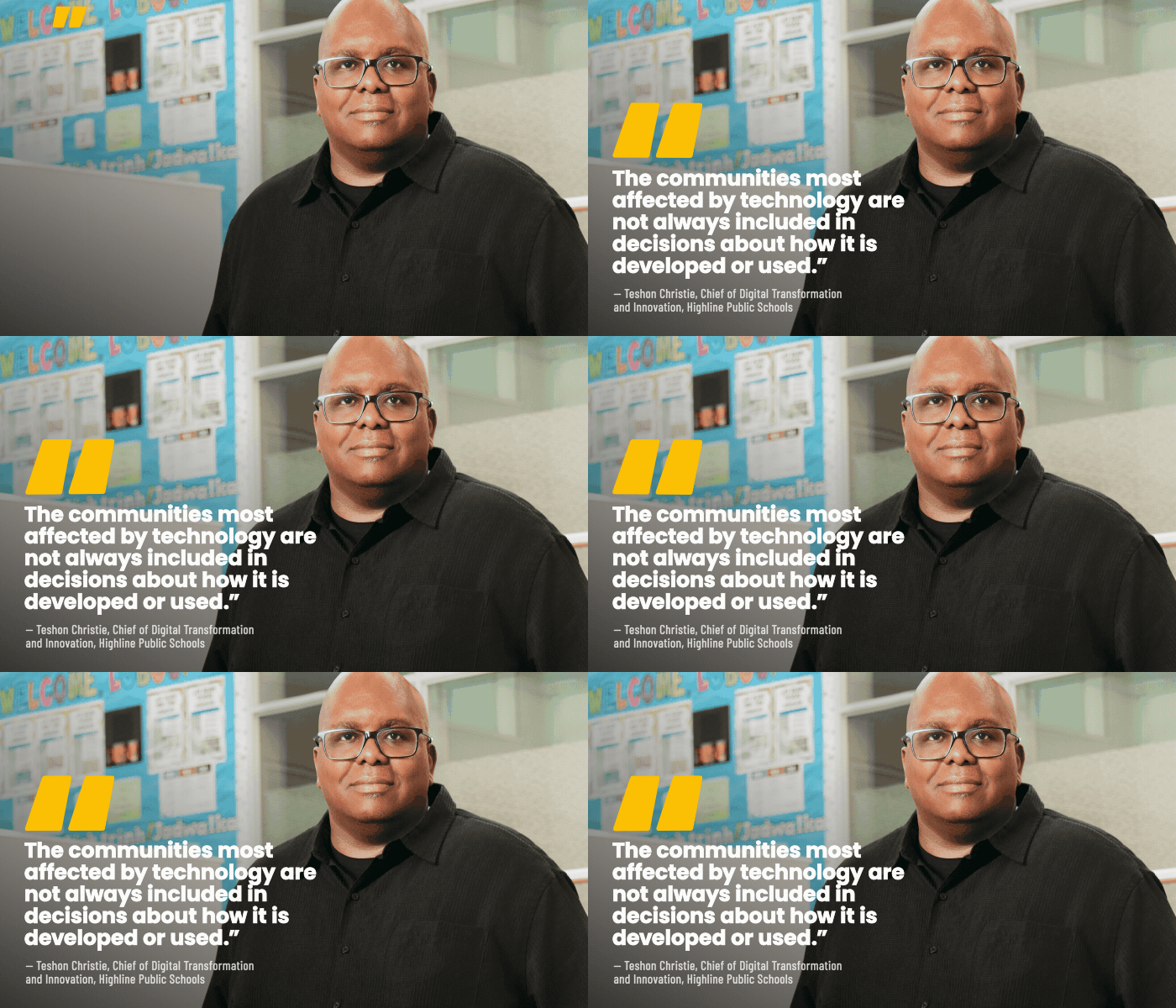
This work is also about student voice and opportunity. The communities most affected by technology are not always included in decisions about how it is developed or used. We want Highline students to have the knowledge and confidence to help shape those conversations.
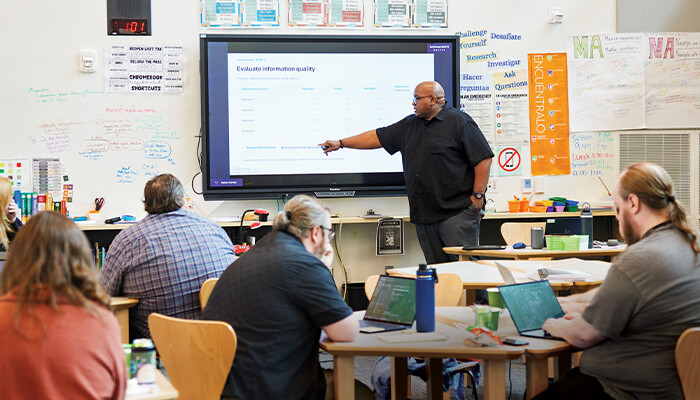
Highline Public Schools’ artificial intelligence implementation strategy combines student feedback and professional expertise.
EDTECH: What’s a project that you’re especially proud of?
CHRISTIE: I’m proud of our data system, which is still going strong about 12 years after I established it. We needed a better system that could help us understand what students were experiencing and turn data into action. Today, the system helps staff identify patterns, ask better questions and make informed decisions. We’ve been intentional in providing context around data so that staff understands what the data actually means.
I’m also proud of our partnerships. There’s trust in our data work because we’ve been intentional in expanding professional development, creating ways for people to get self-service support and rolling data tools into the ethos of what we want to create.
EDTECH: Five years from now, what aspect of Highline’s technology strategy would you want to be seen as an example of human-centered innovation?
CHRISTIE: I would say our AI implementation. Our cross-functional group of ambassadors has had rich conversations and achieved a level of collaboration and forward movement that goes beyond the urgency of, “We have to do AI.” We ask questions, look at our data and do everything we can to support students’ voices and agency. We have a lot of structures around listening to students, and we balance that with what we believe is best.
Five years from now, success would mean students know how to question and use AI responsibly. Staff would understand when it supports learning and when another approach is better. Families and community members would understand how our decisions connect to the Highline Promise.
Technology will continue to change. Our commitment will remain the same: supporting students, strengthening relationships and preparing every student for the future they choose.